Transforming property and casualty insurance with AI
- ClientDuck Creek
- IndustrySAAS
- ServiceUX/UI Design & Research
- Setup1 designer + 1 researcher
- Timeline6 months
The goal
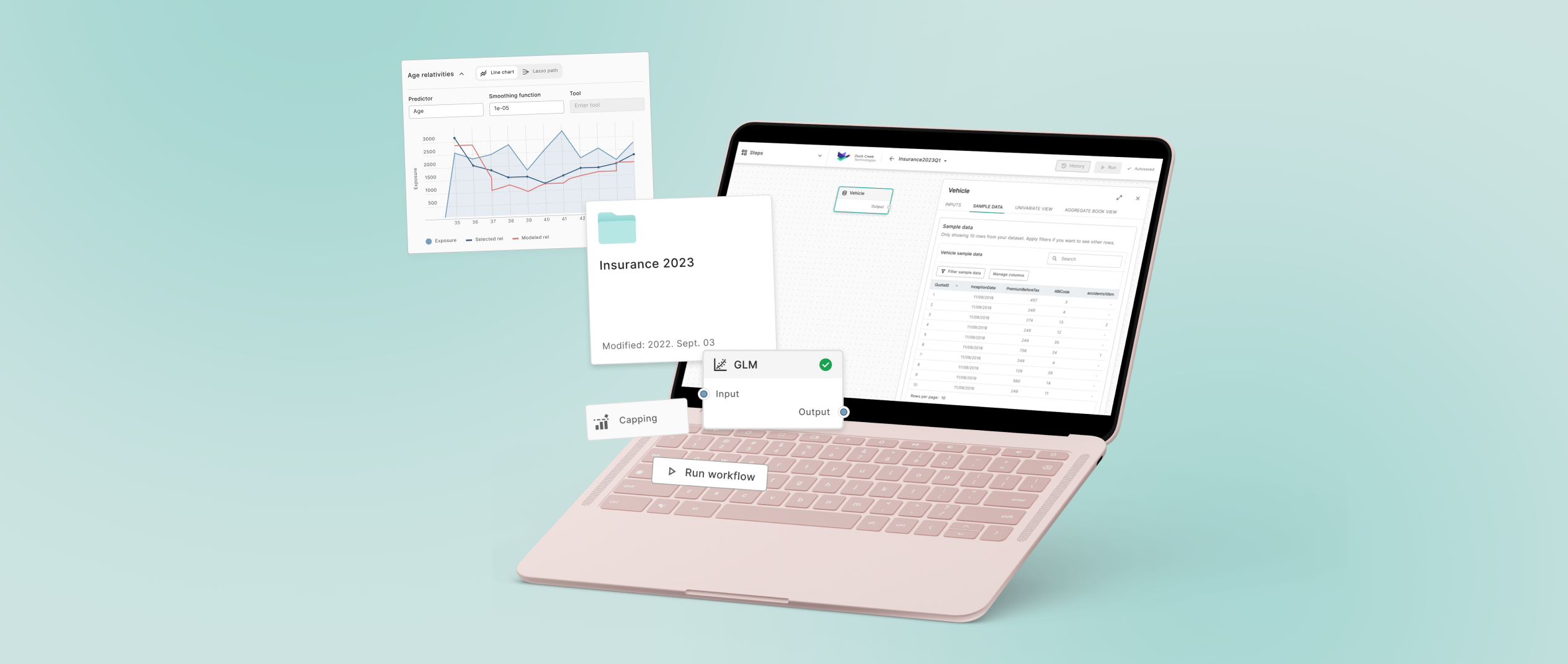
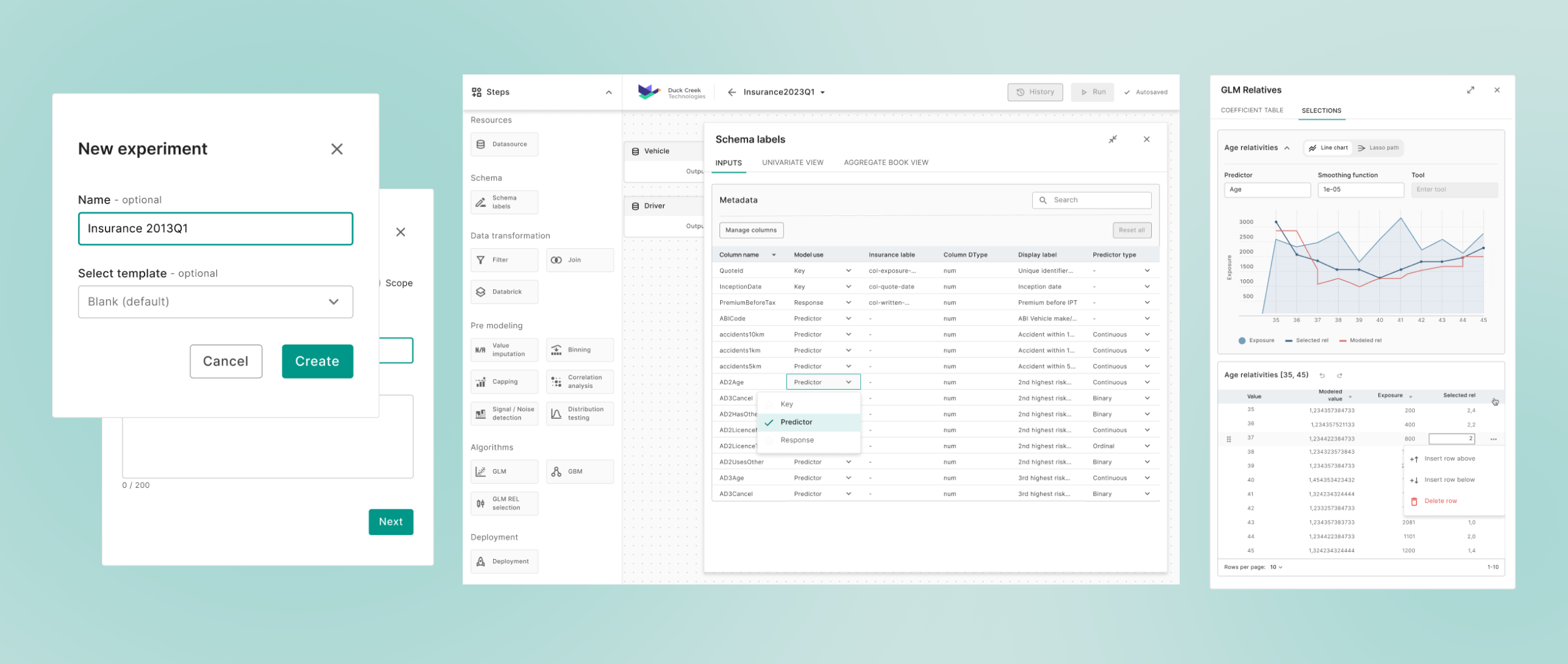
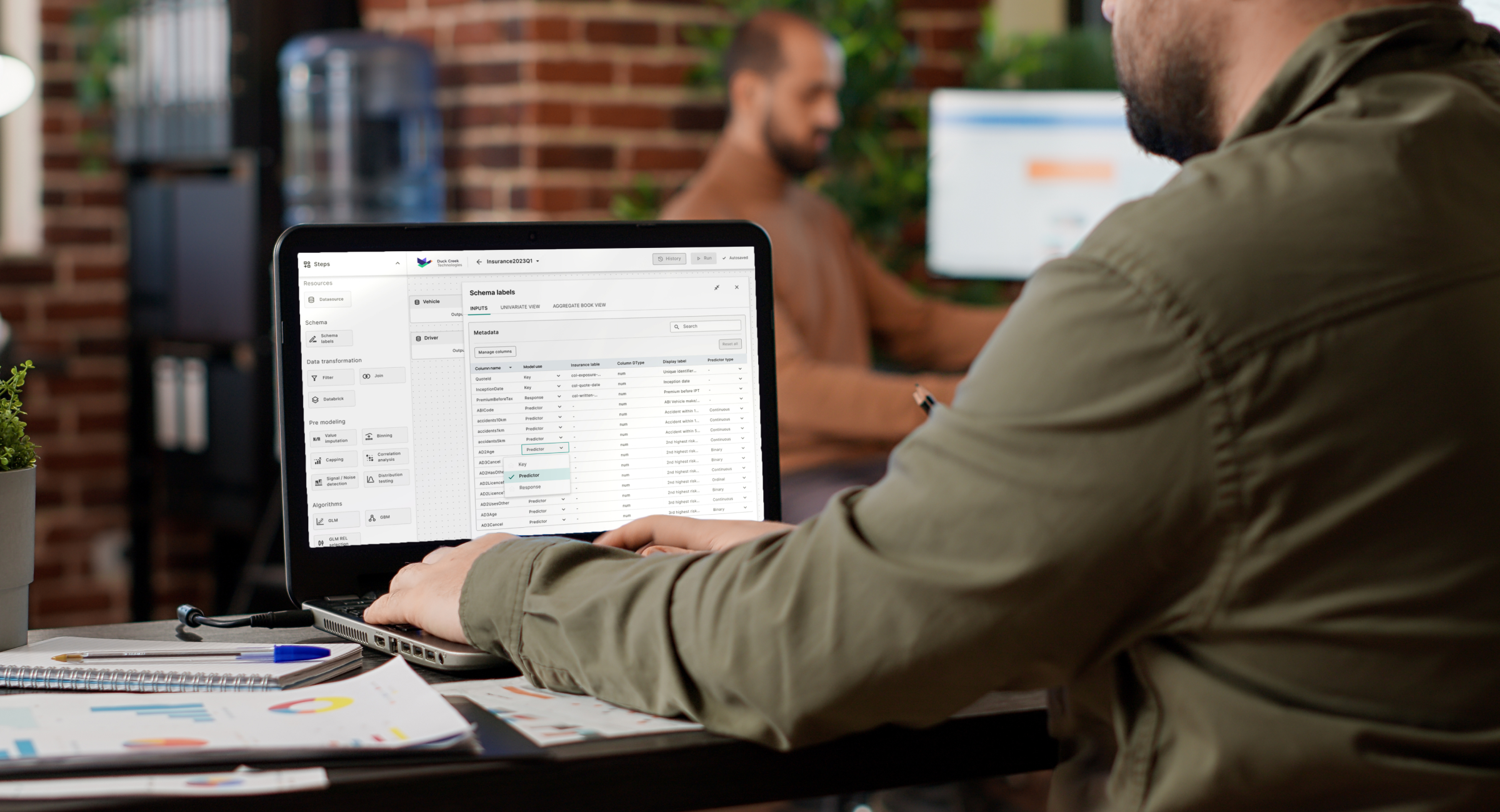
The collaboration focused on the implementation of an AI-assisted predictive model creator used by actuaries to calculate insurance risks. Our main goals were to integrate these new AI-assisted features seamlessly into the existing Duck Creek Machine Learning software, and create a user-friendly, low-code environment for all available features.
The challenge
When we joined the project, the AI risk modeling tool relied on a lot of manual coding. We created a more intuitive design that required less technical know-how from the user end. Our adaptability, deep dive into AI, and holistic approach to interconnected product modules led to a smooth and quick collaboration.
The outcome
By refining the UX and delivering key research, we transformed Duck Creek’s ML platform into an accessible tool—paving the way for a brand-new business segment.
Project timeline

The process
How we started
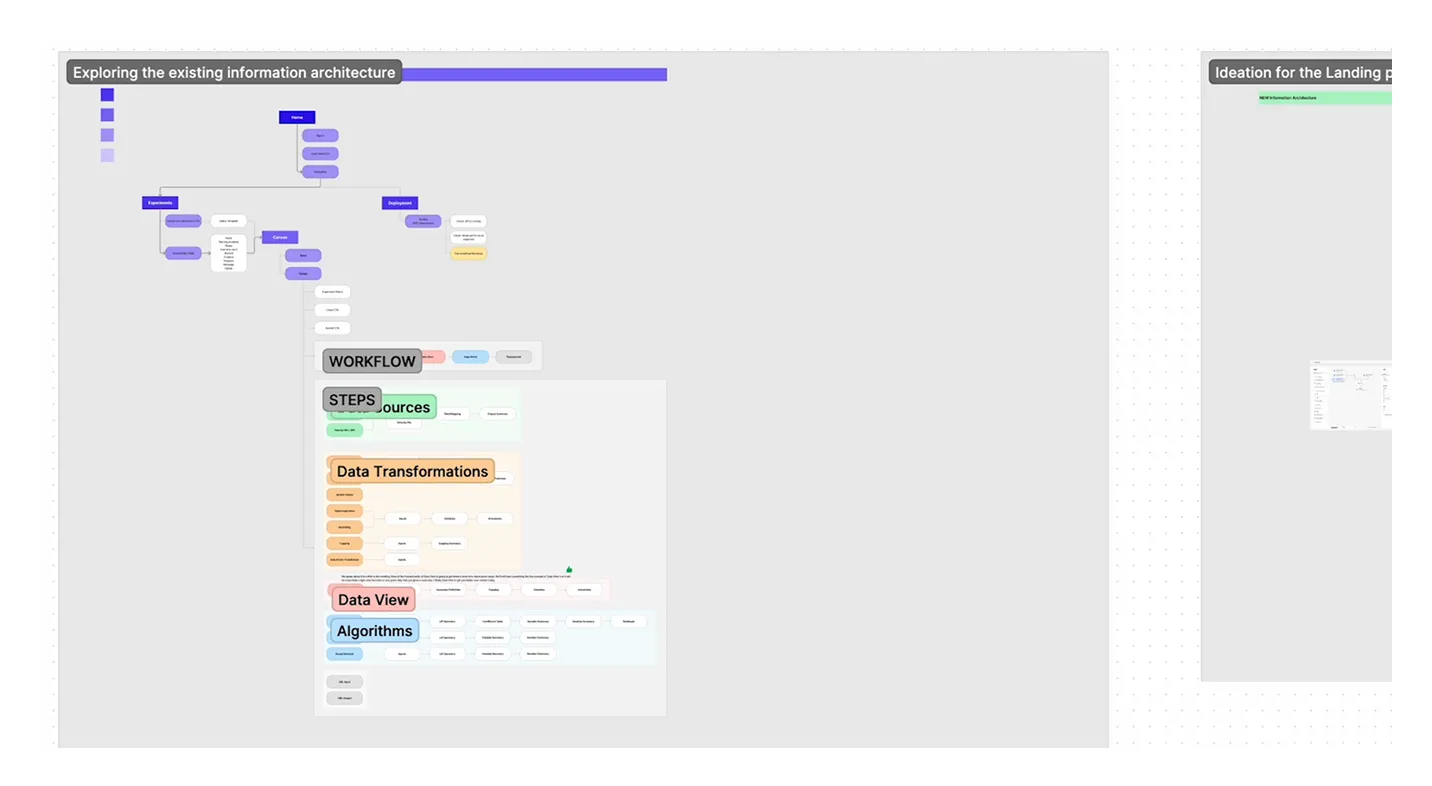
First, we focused on understanding the product's broader context. It included user needs, their tasks, mapping the environment, and exploring technical opportunities.
Stakeholder interviews, market research, and brand direction definition were also an integral part of this phase. These findings helped us craft a fresh identity for the newcomer product within the DuckCreek family.
Ideation session
From sketch to successful solutions
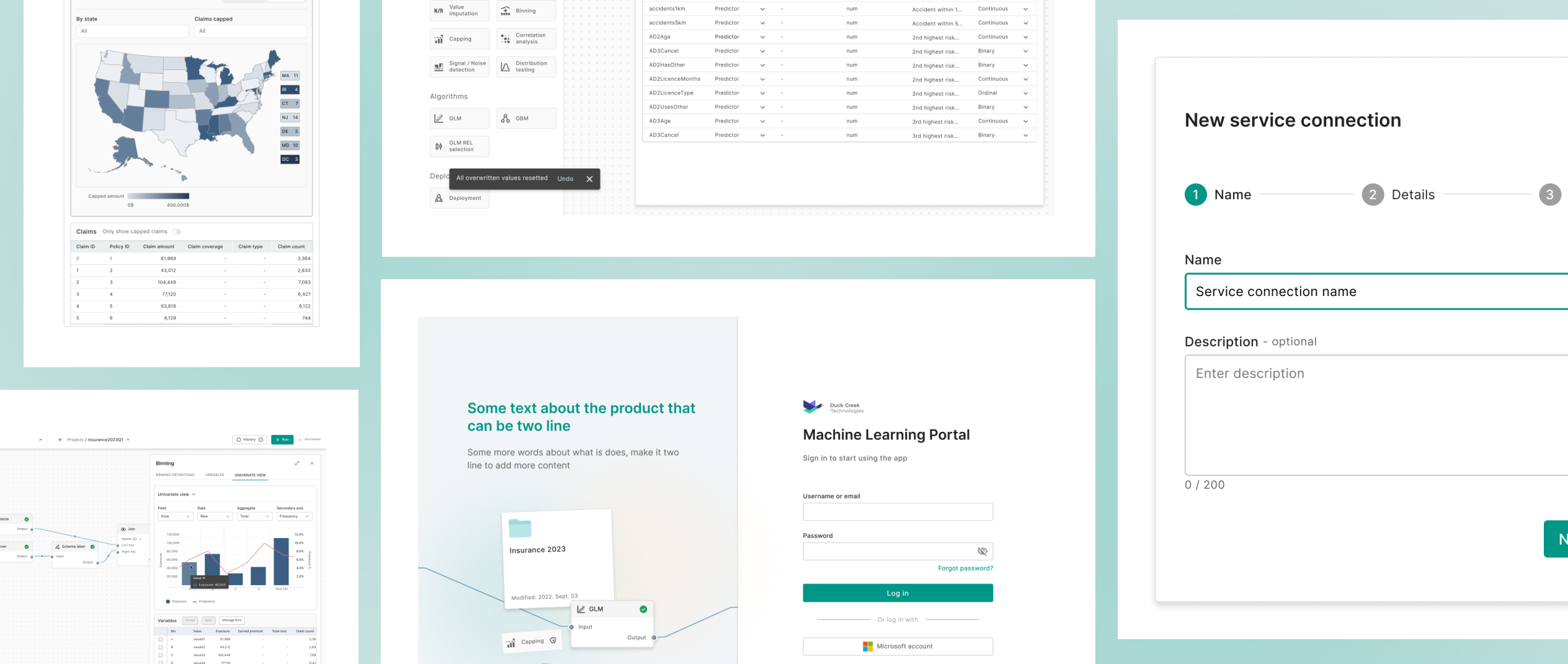
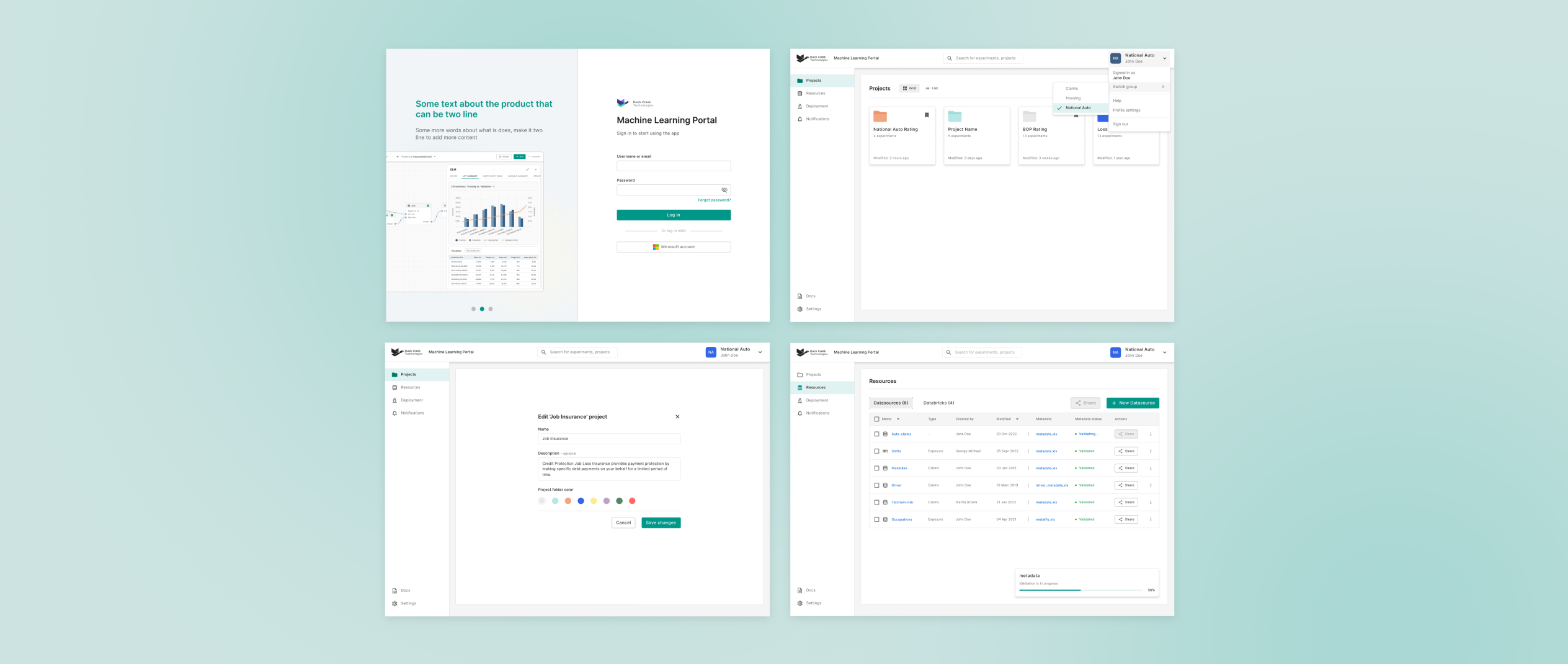
The “generic” feature was entirely new to the product, requiring a ground-up approach. Due to this, the design and development took 6 weeks. This also included ideation sessions and sketching, concept testing, and the delivery of the final screens.
We built a robust infrastructure supporting Duck Creek's Machine Learning platform’s experiments. Taking inspiration from Google Drive's file system, our design allowed for efficient file organization, navigation, search, and permissions management.
Simultaneously, we prioritized integrating it with the “Canvas” feature to harmonize functionalities and enhance user experience in the overlapping areas.
This phase included
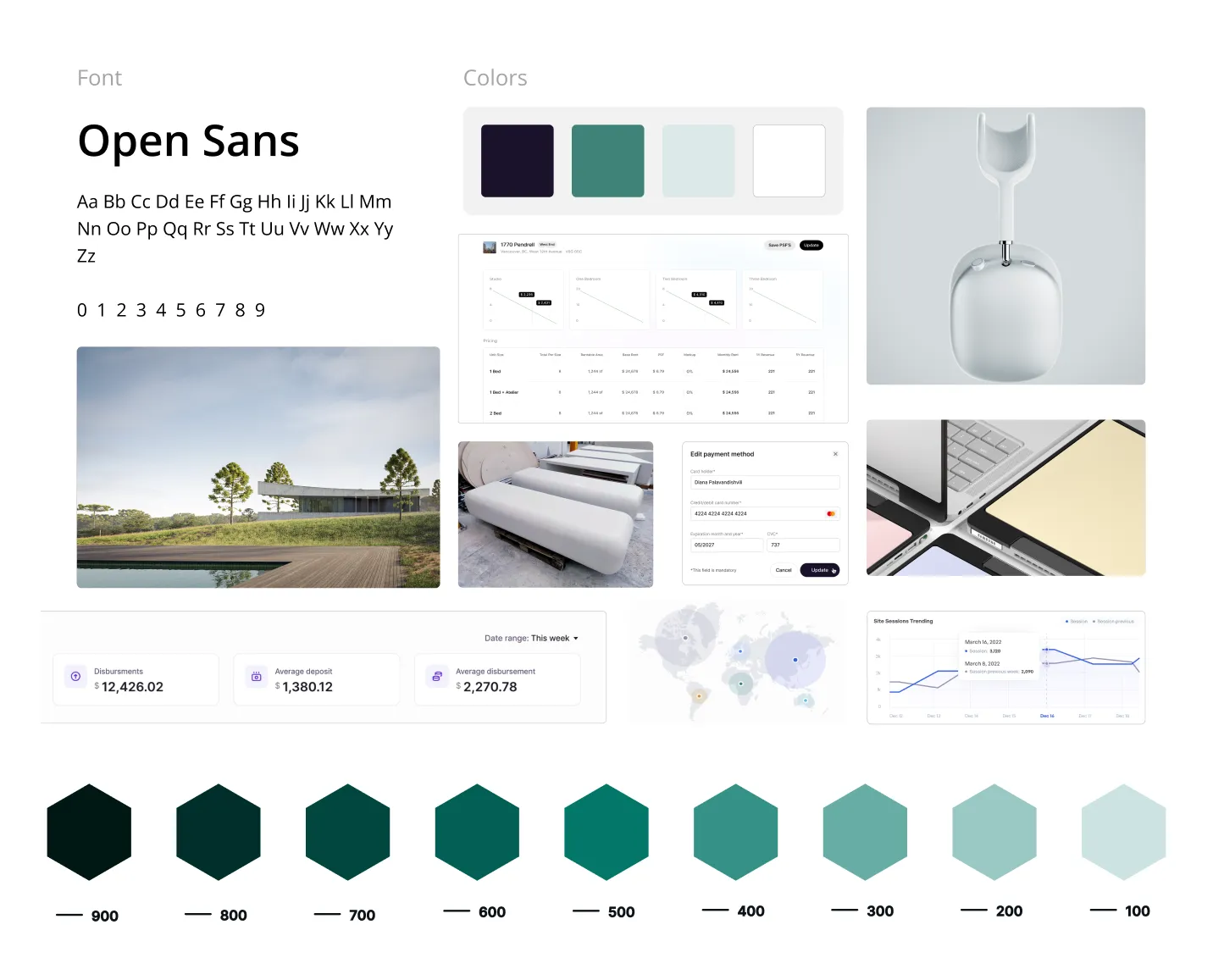
Chosen moodboard
- Moodboards
- Look & Feel
- Concepts
- Information Architecture
- Hi-fi Wireframe
Perfecting the predictive model canvas
In the final 10-week phase, we focused on the “Canvas,” the central area for predictive model creation in Duck Creek's Machine Learning platform. The “Canvas” feature was important because it allowed the users to view the experiment they created in the “Generic” view.This interactive component required thorough testing and multiple iterations. We used clickable prototypes to verify functionality and get fresh feedback from stakeholders and potential users. Ultimately, we made this interaction-heavy part to offer clear model overviews, fast execution, and customizable settings.
This phase included
- Concepts
- Artboards (screen designs)
- Documentation UI kit
Smart tech, strategic UX
We achieved significant milestones during the project, including mapping the product structure, establishing brand guidelines, and creating design assets. From the start, we gathered a lot of insights, which we used to create a feasible timeline and prioritize features.
Through strategic design and thoughtful UX improvements, we turned a complex, code-heavy product into a seamless, user-friendly platform—helping Duck Creek bring cutting-edge AI closer to its customers.
Deliverables
- Design artifacts
- Generic part design
- The Canvas design
- UI kit with all assets for future expansions
Documentation
- Insights gathered during collaboration
- Evidence supporting design decisions