Catching AI slip-ups before they cost insurers millions
- ClientOversee.ai
- IndustrySAAS
- ServiceUX/UI Design
- Setup1 Designer + 1 Researcher
- Timeline1 year
- 20+
Stakeholder interviews
- ~50
Website pages
- 3
Continents
The goal
Our client envisioned a product that’d give real-time insights into AI model performance, detect anomalies, and allow insurance companies to take corrective actions to improve the models over time.
The challenge
We needed to make sure the platform could simplify complex AI insights for both executives and analysts in the insurance industry, regardless of their level of tech-savyness.
The outcome
We took part in conceptualization and built it from scratch in collaboration with OverseeAI’s developer team.
We started with a Proof of Concept (POC), then developed a Minimum Viable Product (MVP) that could be showcased to investors.
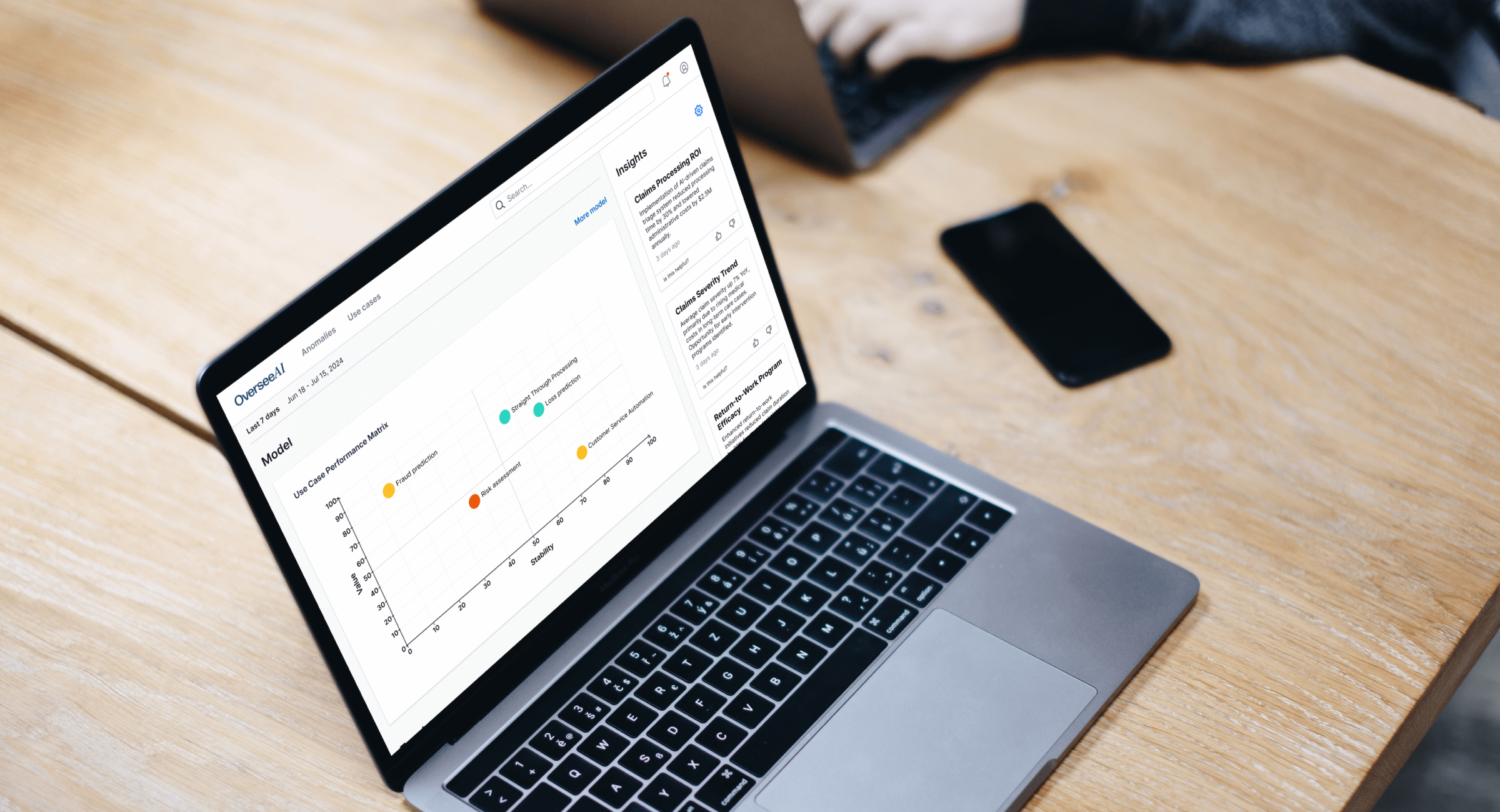
The intuitive interface made it easy for OverseeAI to demo the product’s full potential while offering an impressive hands-on experience.
Project timeline

The process
How we started
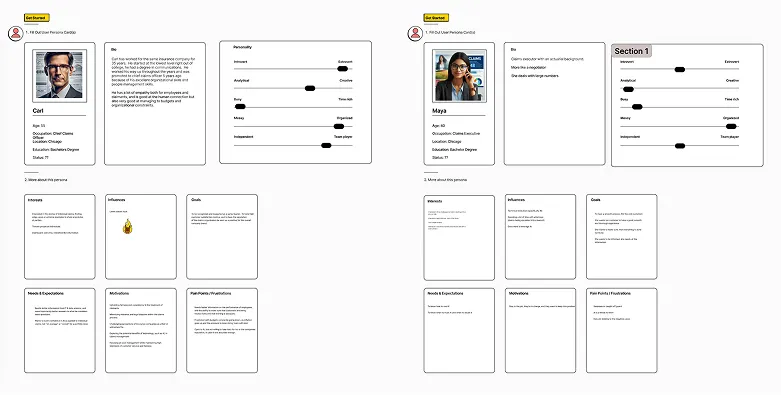
We kicked off the project by collaborating with the client to define the user personas and understand their needs and expectations for the platform. We developed two personas in detail :
- Carl - an executive persona
- Maya - a claims manager persona
We also mapped out key insurance processes like Claims Processing and Underwriting, to gain a clearer understanding of the challenges and data flow at each stage.
This foundational work helped us align the platform’s features with real-world business processes.
Discovery conclusions
The main conclusion of the discovery is that the primary pain point for the executive persona is the lack of overview and control over what is happening with the AI models.
Dashboard Design
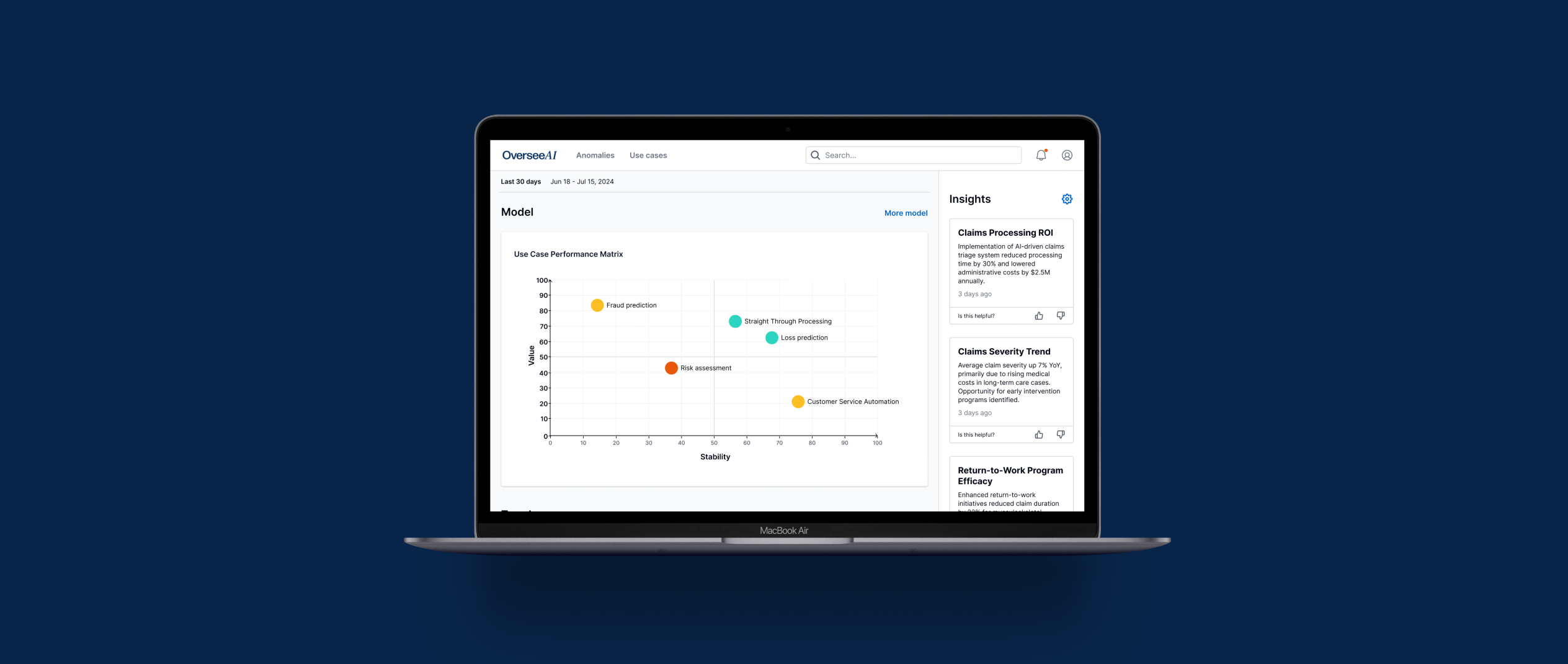
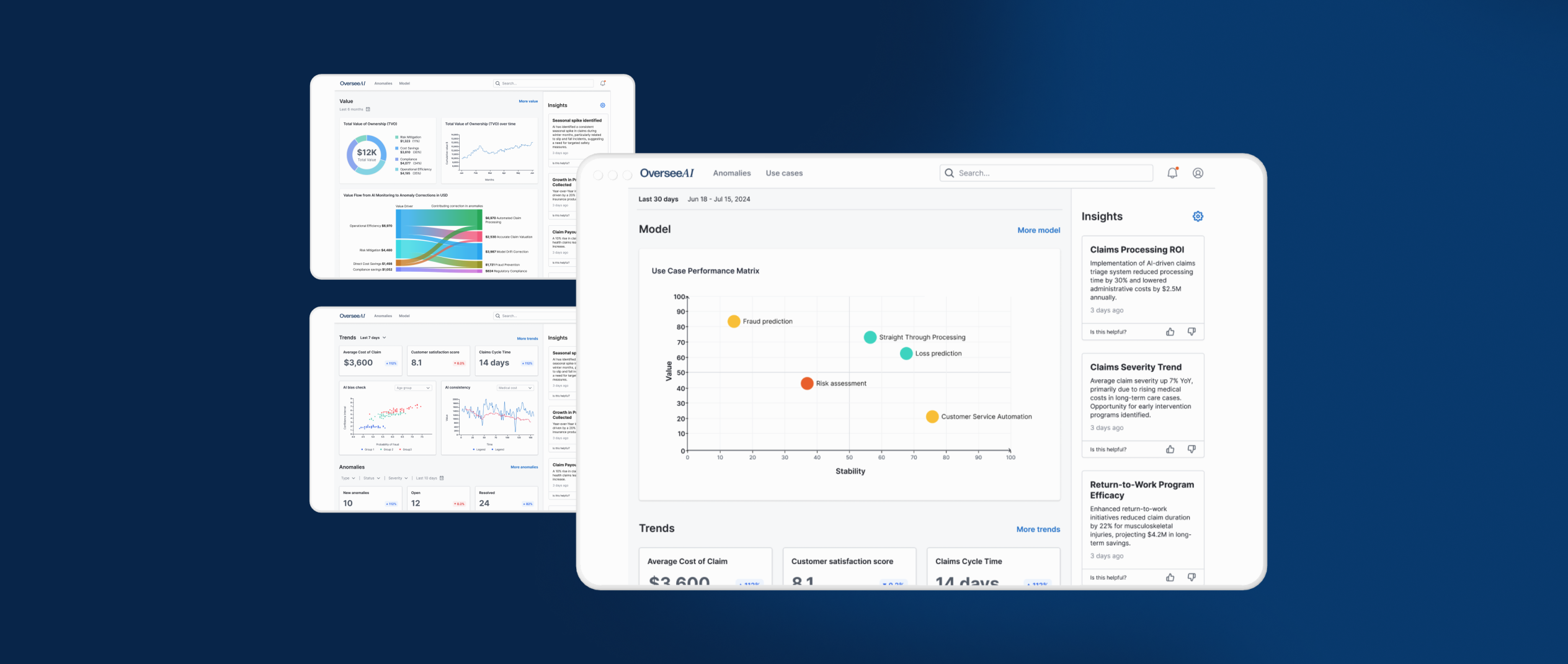
The core of the OverseeAI platform is the Dashboard, which serves as the primary interface for monitoring model performance and the underwriting/claims process.
The dashboard displays key metrics, including AI model health indicators and anomaly rates real time.
We focused on providing a clean and intuitive layout, with visualizations like progress bars and charts that give executives and analysts a high-level view of AI performance and efficiency.
By streamlining the data presentation, we made sure that users could understand both the overall health of the system and the specific outcomes of individual models at each stage.
Anomaly Detection
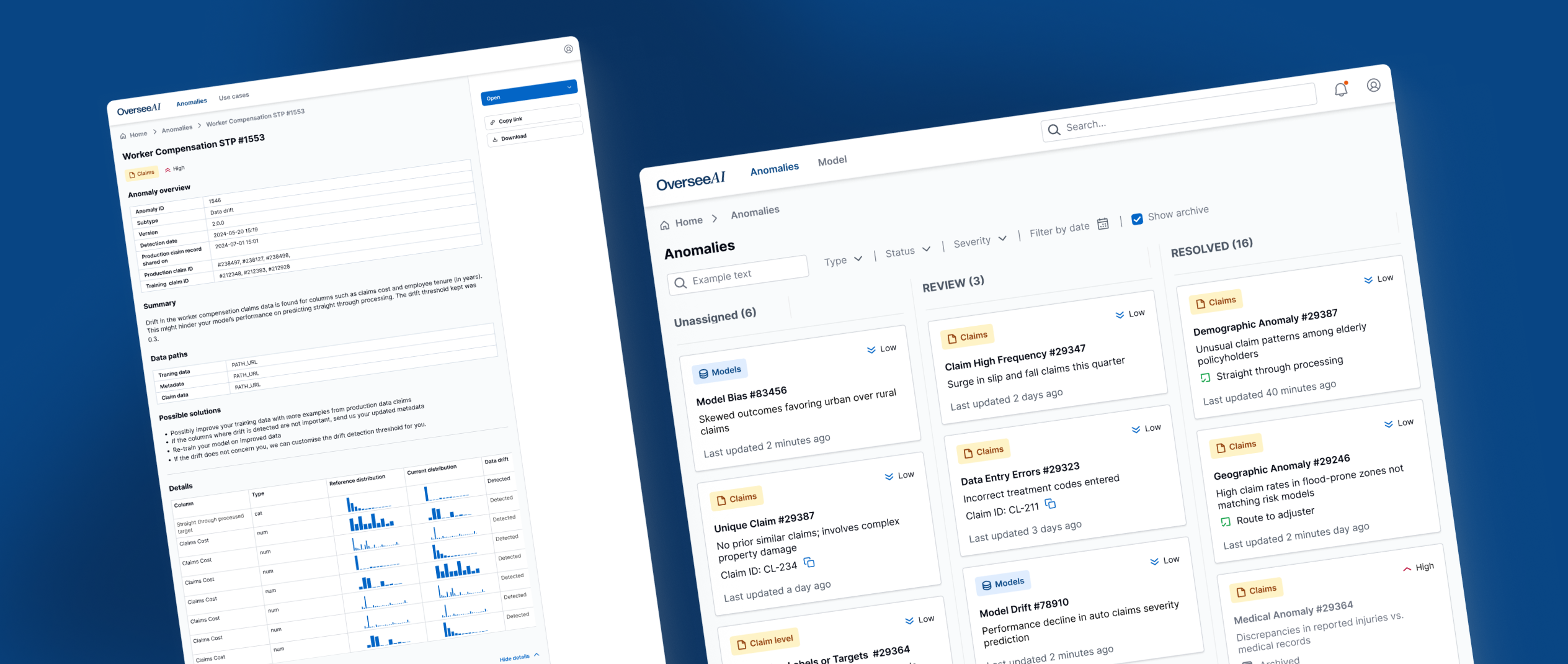
Anomalies are flagged throughout the underwriting and claims processes, and the Anomaly Detection page allows users to review these flags in real time.
The feature focuses on actionability, allowing users to mark anomalies as false positives or take corrective actions. Each flagged anomaly is accompanied by a feedback mechanism, where users can provide insights that improve model accuracy.This continuous feedback loop ensures that the system evolves and adapts to new information.Key elements:
- Flagged anomalies are shown with detailed information, including anomaly rate and trust score.
- Real-time feedback can be provided by users to help train the models.
Fresh ideas by ever changing characters
After 1 year of stable collaboration with the core team (3 designers + 1 researcher) we continued with 1 designer and 1 researcher on demand.
Our collective wins
- Our collaboration with the client company improved their UX maturity.
- We provided training and workshops to teach UX principles and methodologies.
- Receiving the Red Dot Award for the project in the "Interface & User Experience Design" category.
- User experience for the application, including its innovative design, interactive data visualizations, and seamless user journeys.
- Design System with foundational elements, components and guidelines to maintain a cohesive website.
- We conducted usability testing, user interviews, and iterative design to ensure the app met the expectations.