Outsourcing design in SaaS: what you need to know

As your product grows, design can eventually become a bottleneck, and at some point, you’ll face a difficult question: should you hire or outsource? It's a reasonable question, but it's also a bit of a false choice. The real question is how to get design that's genuinely committed to your product, and the answer doesn't always map neatly onto either option.
Why SaaS companies struggle with designer hiring
Ask any SaaS founder when they made their first serious design investment, and the answer is almost always ‘later than we should have.’ The reason is pretty structural.
Most SaaS companies are built by engineers first. The early hires write code, and there's nothing to design until there's something to build.
This sequencing makes sense at the start, but it sets a default that's hard to break: design becomes something that gets layered on top of the product, rather than something that shapes it. UX design enters the picture reactively and not as a planned investment, but as a response to pain.
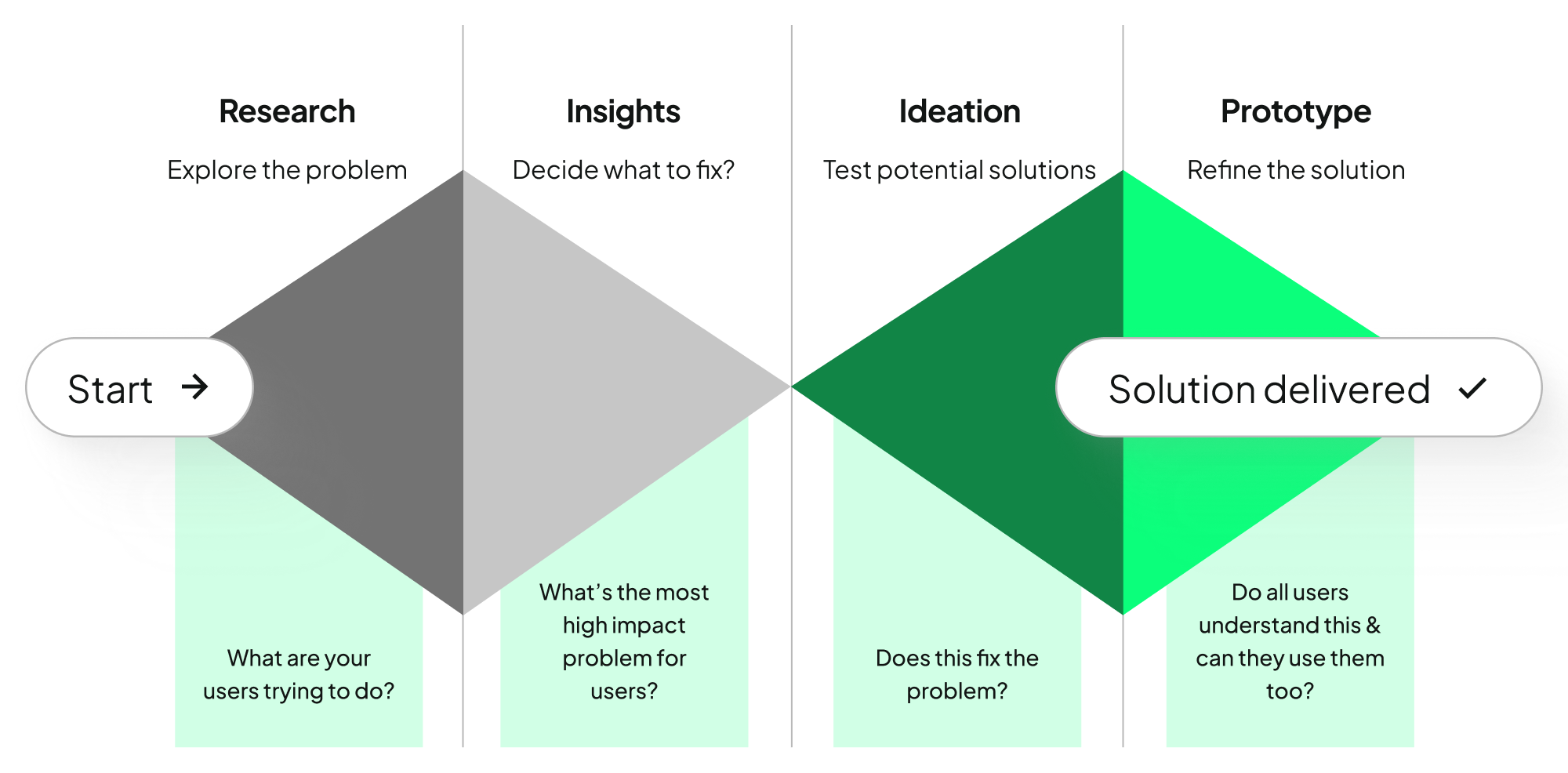
Support tickets fill up with "users are confused." At the same time, retention drops and nobody can explain why. Eventually it leads to sales calls that go down, as a prospect couldn't find a feature that was right there on the screen.
And even when the problem is obvious, the hire doesn't happen, because…
- Partly there's no "design" column on the roadmap, so it doesn't feel like a staffing gap, just something to sort out later
- The product moves faster than hiring timelines: by the time a job post is written and filled, the need has already shifted
- Design is genuinely hard to evaluate without a design background. Engineering interviews have right and wrong answers
Design interviews often come down to "does this portfolio look good to me," which isn't the same as knowing whether someone can think through a complex user flow or push back on a bad product decision. This uncertainty breeds hesitation, and hesitation, in a growing SaaS product, has a cost.
What a poor user experience is actually costing you
"We'll fix the UX later" is one of those things that sounds reasonable but in reality isn't. UX debt doesn't sit in a backlog waiting to be scheduled; it grows in the background and shows up in metrics that don't obviously point back to design:
- Activation drop-off: New users who can't find the value in your product fast enough won't come back, and they rarely say "the UX was confusing" when they leave. It just looks like churn.
- Low feature engagement: Features that took months to build go unused because users can't find their way to them. That gets attributed to weak marketing or poor fit. It's often just friction.
- Higher operational costs: Confusing UX generates support volume. When users can't figure something out, they open a ticket. Early on, a few extra support tickets a week feels manageable, but on the long run, you're staffing a support team to answer questions that better UX design would have made unnecessary.
- Falling behind competitors: Markets move, and user expectations move with them, often faster than internal teams realize. A product that felt "good enough" a year ago is falling dated without anything obviously breaking. Competitors who invest in design consistently don't just look better; they're able to ship new ideas faster because their product foundation is cleaner and easier to extend.
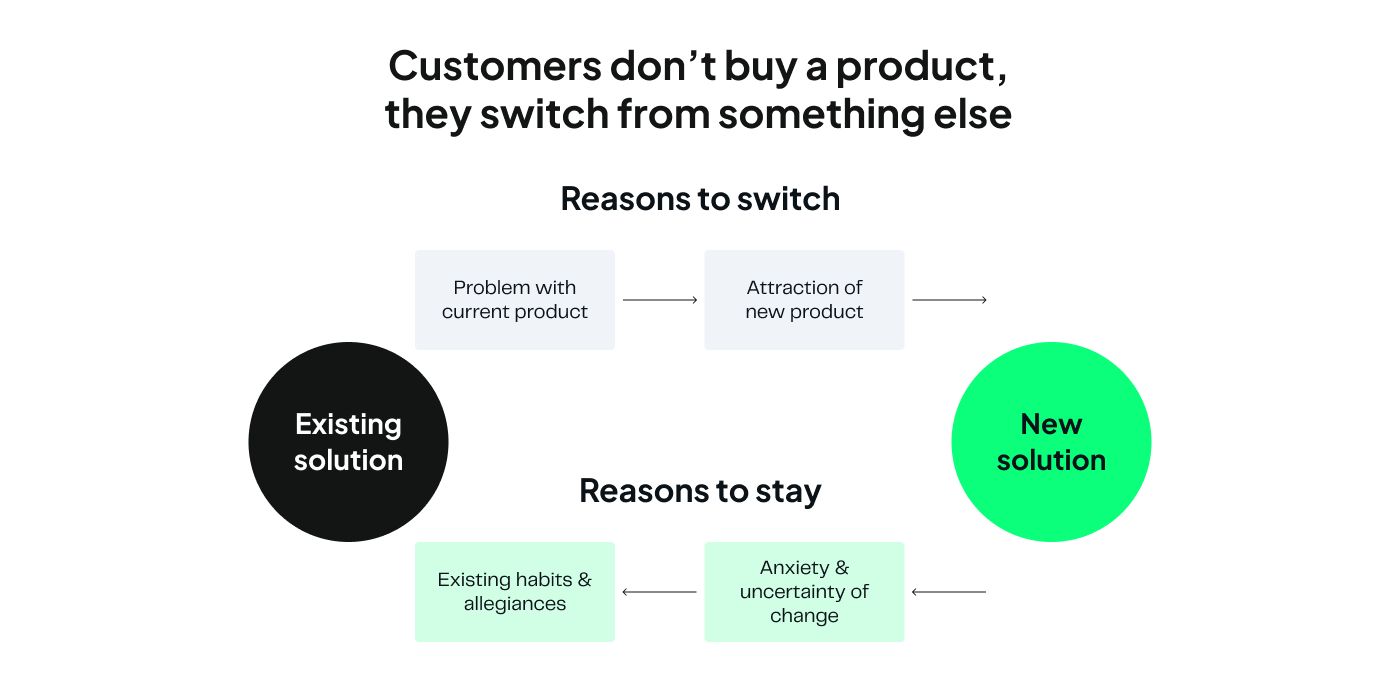
- Engineering slowdown: Design decisions that aren't made upfront don't disappear, they just get made mid-sprint, by whoever is building that feature. Multiply that across a year of sprints, and you get inconsistent patterns, redundant components, and interaction logic that varies depending on when a screen was built.
- Slower product growth: Every new feature gets built on top of whatever foundation exists. When that foundation is unresolved, extending the product is slow, and competitors who sorted their UX earlier can move faster, not because they have better ideas, but because their product is easier to build on.
The longer it waits, the more it spreads. By the time it's a priority, it's no longer just a UX problem, it's embedded across the product.
Is design easier to outsource than engineering?
On the surface, it seems like it should be. Engineering outsourcing comes with obvious friction: a contractor needs codebase access, architecture context, and an understanding of how systems interact.
Design feels more portable by comparison: you write a brief, you get back files. The work is visual, tangible, easy to review. So the assumption goes: if you're going to outsource anything, start with design.
Whether that's true depends almost entirely on what kind of design work you're talking about.
Tactical design work — UI refreshes, marketing pages, landing pages, design system components — is genuinely portable. The scope is defined, the success criteria are clear, and the work doesn't require the designer to deeply understand your users or your product strategy to execute well. A skilled freelancer can do good work here with a solid brief and a few rounds of feedback.
Strategic product design is a different category. User flows, onboarding sequences, information architecture, the design of new product areas- this work can't be fully specified in a brief, because sometimes the brief itself is part of what needs to be figured out. It requires the designer to understand not just what you want to build, but why, for whom, and how it fits into the rest of the product. They need to push back when the direction is wrong and make judgment calls that no brief can anticipate.
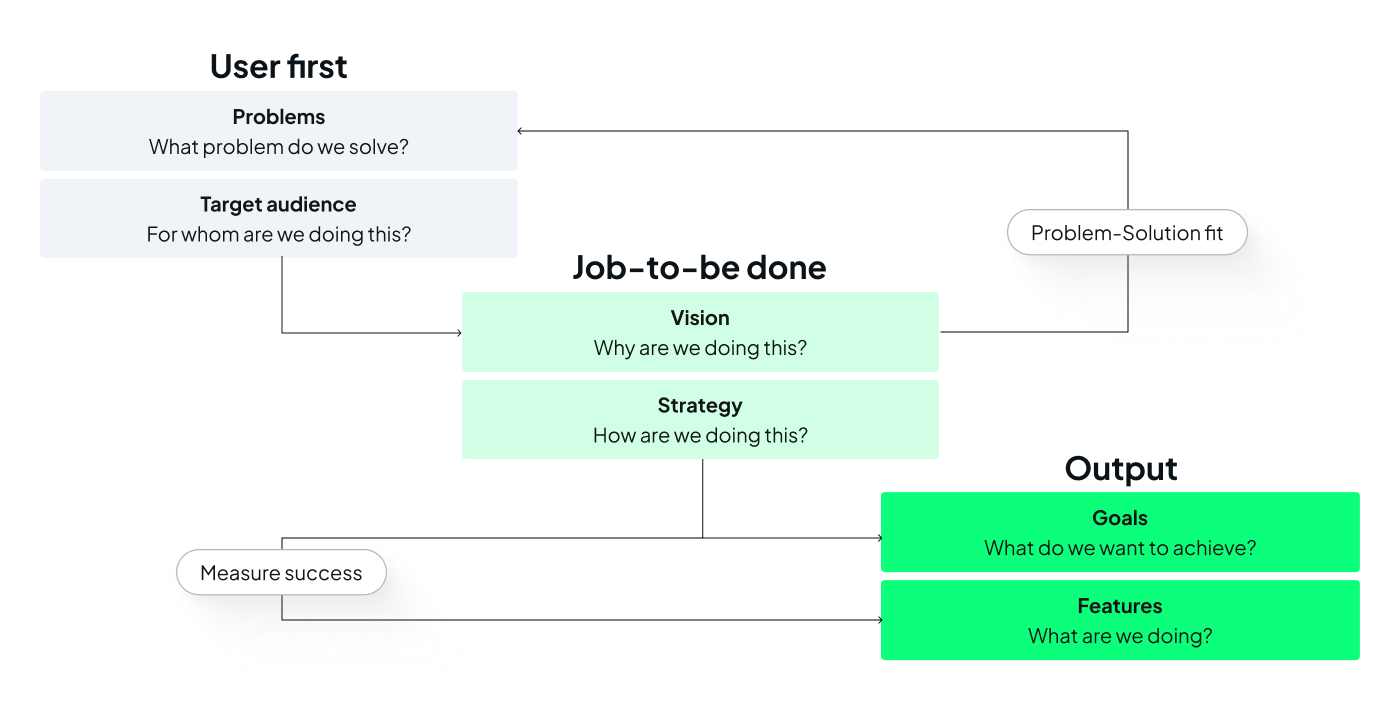
The problem is that most teams don't make this distinction when they outsource. They hire a freelancer or a project-based agency to handle "design”, and then hand them a problem that is genuinely strategic. The designer does what they can with what they've been given. The output looks reasonable, but it was built without the product context, user knowledge, and ongoing involvement that the work actually needed. This gap shows up later, in flows that don't quite work, in onboarding that loses users, in a product that looks designed but doesn't feel considered.
This is where most outsourcing disappointment comes from. Not from bad designers, but from the wrong setup. Tactical work given to a tactical resource works fine. Strategic work given to someone brought in for a fixed scope, without context or continuity, rarely does, no matter how talented they are.
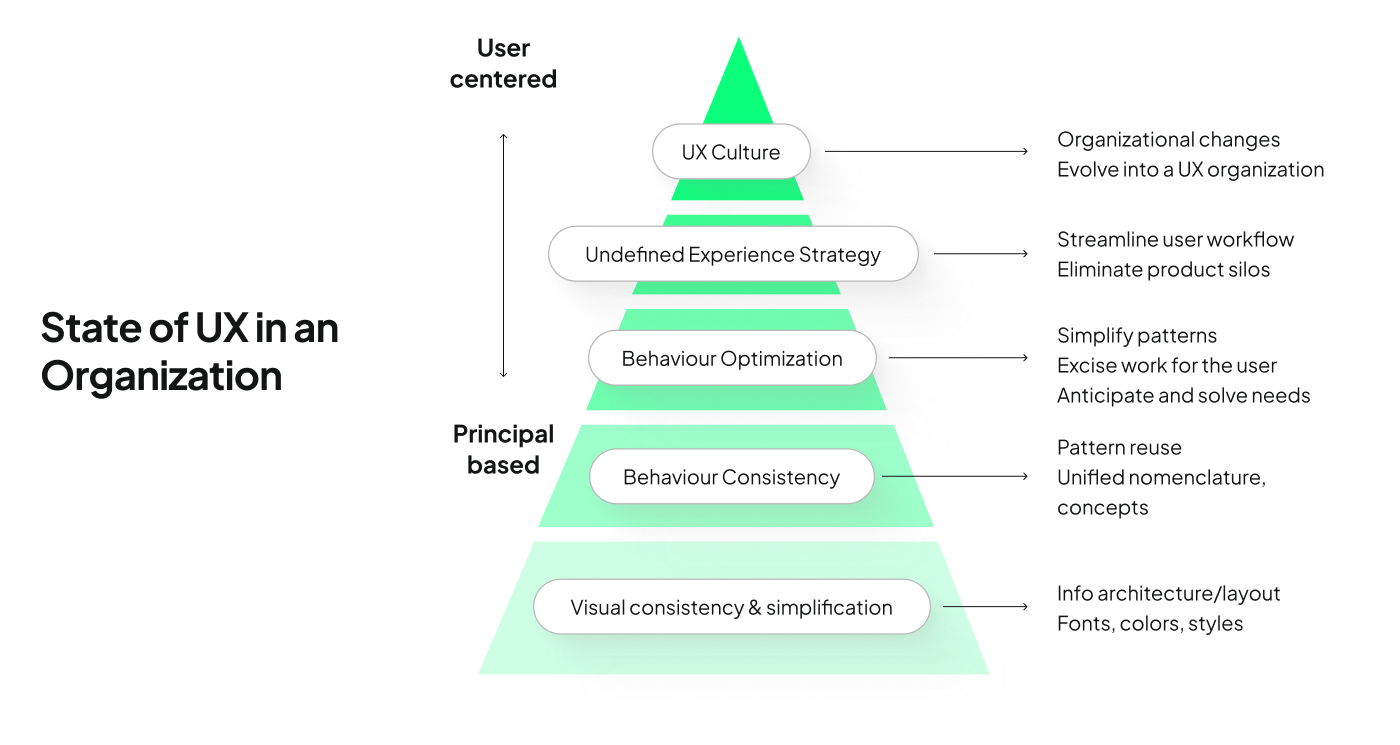
The real costs of getting outsourcing wrong, and what to do instead
Most SaaS teams have tried some version of outsourcing design. A freelancer, a short agency engagement, someone from a platform. And many have a version of the same story: it was fine, but something was always slightly off. The costs of that "slightly off" rarely show up on an invoice.
Most teams experience outsourcing as one of two things:
- a freelancer they brief project by project,
- or an agency that takes a scope, disappears for a few weeks, and delivers.
Both can produce good work in the right conditions. But both share the same structural limitations, and those limitations matter a lot more as the product gets more complex.
The context problem
Every external designer starts at zero. They don't know your users' mental models, the edge cases your power users depend on, or the product decisions currently being debated on the roadmap. A good designer can close some of that gap through onboarding and good questions.
The issue is that a lot of what makes design decisions right in a specific product isn't written down anywhere; it lives in the accumulated experience of being close to the product over time. The practical consequence of this is that UX decisions end up being made outside the conversations where they should happen. The roadmap gets set internally, and then the brief goes to the external designer, who is now being asked to design for a context they weren't part of shaping.
With an embedded designer, this doesn't happen. They're in the product conversations, the sprint planning, the roadmap discussions, building context the same way an in-house hire does, just without the hiring process attached to it.
The briefing burden
Good outsourcing requires good briefs, and good briefs are genuinely hard to write. They require a clear understanding of what design should be doing, which is exactly the kind of understanding that tends to be underdeveloped in teams that haven't had strong design leadership.
Vague briefs produce off-target work. Off-target work requires revision rounds. Revision rounds require re-engaging the designer, re-establishing context, and waiting for availability. Each cycle eats into the time and cost savings that outsourcing was supposed to deliver.
An embedded designer doesn't need a brief in the same way. They already know the context. The conversation is shorter, the feedback loop is tighter, and the work moves faster because the setup cost of every engagement has already been paid.
The handoff problem
When a freelance or agency engagement ends, what stays behind? Design files, usually. Maybe a component library. What almost never survives is the reasoning: why things were designed the way they were, what alternatives were considered, what user behavior the decisions were responding to. That knowledge leaves with the designer.
The next person to work on that part of the product has to reverse-engineer decisions that should have been documented, and will inevitably break things they didn't know were connected.
With an embedded model, the relationship is ongoing. The designer who worked on onboarding six months ago is still there when a new feature touches it and still knows why it was built the way it was.
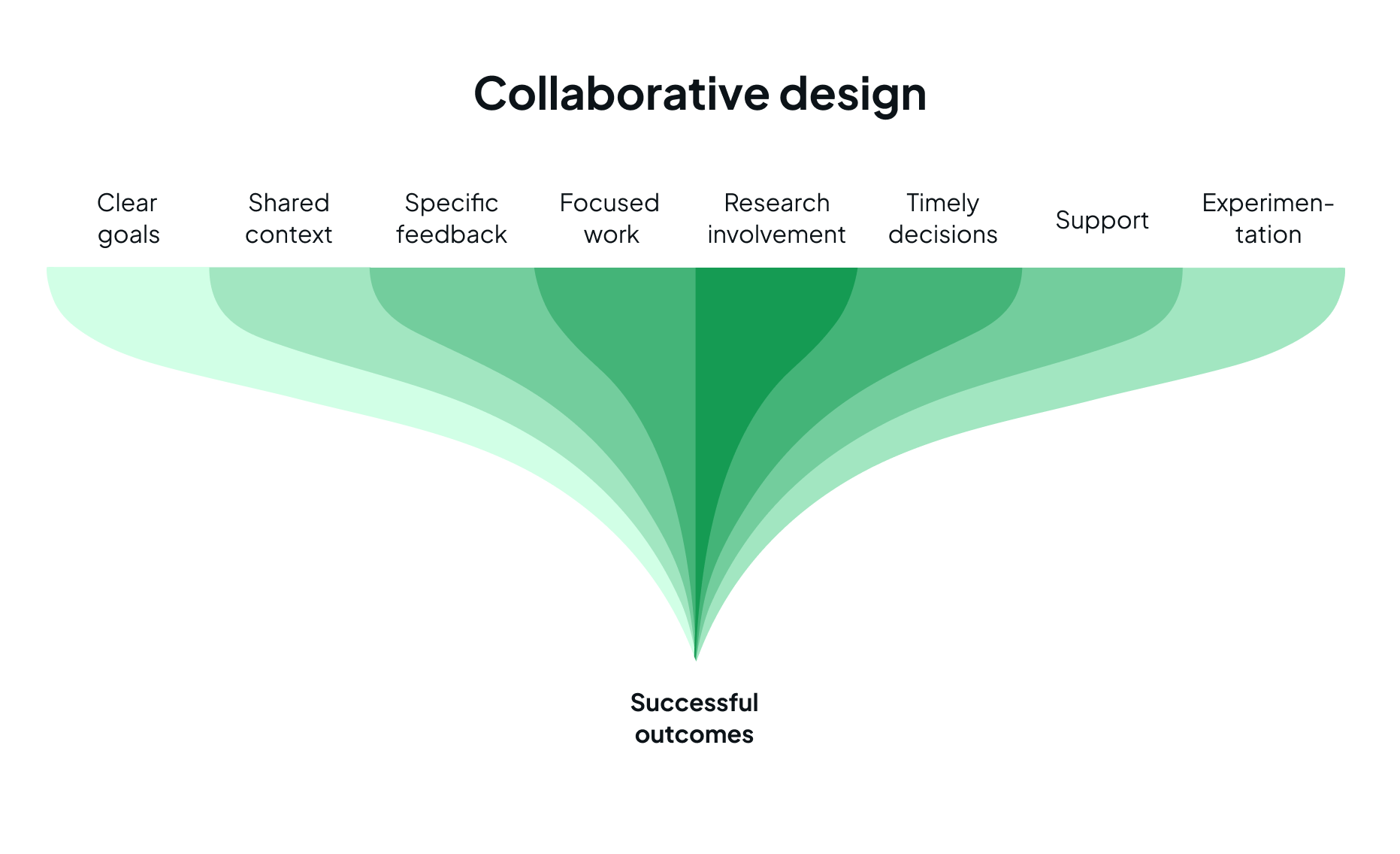
The difference between traditional outsourcing and an embedded model isn't really about talent. Most freelancers and agencies have plenty of that. A designer who is brought in for a fixed scope, without continuity or real product context, is set up to produce reasonable output at best.
A designer who is embedded in the team and present in the conversations, accountable to the roadmap, building knowledge over time, is set up to actually move the product forward.
That's what most founders mean when they say they want someone who "really gets" the product. They are not looking for a specific personality trait; “really getting the product” happens when the working relationship is built to produce it.
What an embedded design support actually changes
There's a difference between having design work done and having design ownership. Most of what we've covered so far is about the former: getting screens designed, flows mapped, interfaces built. But the teams who talk about design as a genuine advantage aren't describing better-looking output, but something that changes how the product gets built in the first place.
The most obvious shift is iteration speed, but not in the way people expect. It's not that a committed designer works faster, but the back-and-forth that normally eats up time stops happening. When a designer has been living inside the product for months, they don't need a brief explaining why a feature matters or how it fits with what already exists. Engineering and design move in sync instead of in sequence. Decisions that used to get made mid-sprint, by whoever happened to be building that part of the product, get made earlier and more deliberately. Fewer things need to be revisited after they ship.
This alignment has a downstream effect on product decisions too. A designer who's in the day-to-day conversations isn't just reacting to a roadmap, but they're shaping it. Trade-offs get surfaced during planning instead of being discovered during QA.
The less visible shift is user understanding. Every support conversation, every usability session, or unexpected user behavior adds another layer to a designer's working model of how your users think. The model gets better over time and influences everything from onboarding to feature prioritization. It's not knowledge you can hand over in a brief, but a pattern recognition that builds up through being consistently close to the product and the people using it.
None of this comes from a job title or an employment contract, but it needs commitment and context from someone being present long enough that they stop reacting to the product and start thinking with it.
This is what an embedded designer brings: not just execution, but genuine product thinking that compounds the longer the relationship runs.
Most of the "hire vs. outsource" conversation focuses on cost and speed, while the real question was never about either of those things: it was always about how to get a designer who is truly committed to your product, present in the right conversations, and building knowledge that compounds over time rather than resetting with every engagement.
This is what the embedded model delivers without the overhead of a full-time hire or the limitations of a transactional agency relationship.

Need a designer who can grow with your product?
If you're exploring alternatives to hiring or traditional design outsourcing, we'd be happy to show you how our embedded team model works and whether it's the right fit for your product. Get in touch to discuss your challenges with our team.