Looking for the best UX research agency in 2026? Here's our top 7

If you want your digital product to succeed, never ignore data. UX research consultants can help you understand your users' behavior, identify areas for improvement, enhance usability, and ultimately provide a competitive advantage.
In this article, we introduce a handful of UX research firms, break down their expertise, and offer solutions to help you find the right match for your goals.
1. UX studio
Deep UX research for complex B2B SaaS products
UX studio stands out for treating UX research as a discipline, not an add-on. Their team is made up of academically trained researchers in UX, sociology, and psychology who embed themselves directly into your product team.
They bring deep user insight, unbiased decision support, and strategic clarity to every stage of product development. With long-term collaboration, exclusive focus on your project, continuous discovery, and research systems built around your needs, they help you build products grounded in real user value.
For companies that want a reliable, long-term research partner, not just a vendor, UX studio is the agency to call or message.
2. Nielsen Norman Group
Where UX pros go to level up
Nielsen Norman Group is one of the most trusted names in UX. Their research-driven approach, long history of shaping usability standards, and extensive training programs make them a gold standard in evidence-based design.
With over 25 years of influence—from defining usability heuristics to uncovering the F-shaped reading pattern—they continue to guide UX professionals worldwide. They’re a great fit if your goal is to get your UX team to the next level through courses.
3. Experiment Zone
Research and CRO in one
Experiment Zone combines UX research with CRO to deliver business results. Their multidisciplinary team—strategists, analysts, designers, and researchers—works together to discover, test, validate and implement solutions that boost scaling businesses across multiple sectors.
With proven methods and continuous iteration, they help brands grow sustainably. If your main goal is to have research boost marketing and sales, Experiment Zone is a smart pick.
4. Guidea
The digital health experts
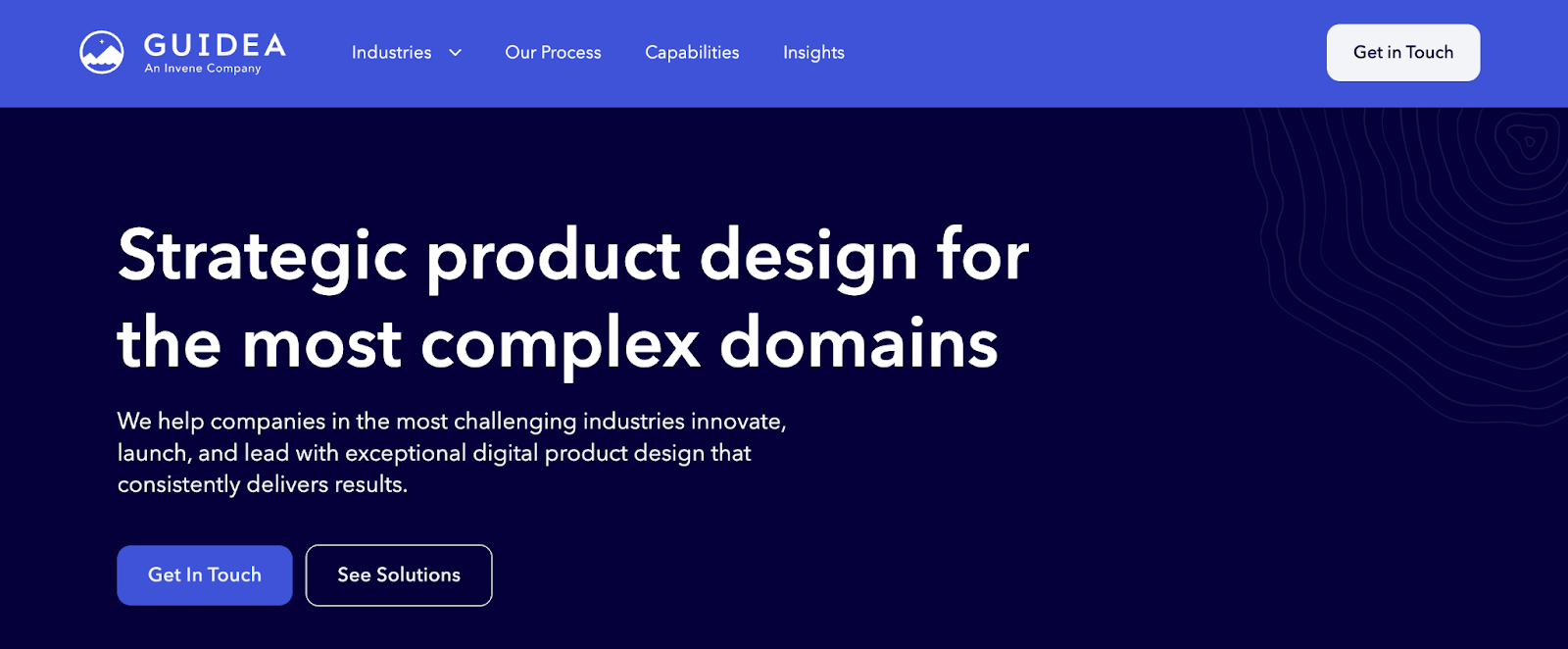
Guidea turns ambitious ideas into high-performing products. From startups to enterprise organizations, they deliver research-backed design, validated prototypes, and scalable systems.
With a history of 300+ product launches and numerous awards, they’re trusted by some of the world’s leading health companies. Their main speciality is healthcare, but they can also be a good choice for FemTech, Cloud, EdTech and FinTech companies.
5. Qubstudio
Insight-led design for digital-first companies
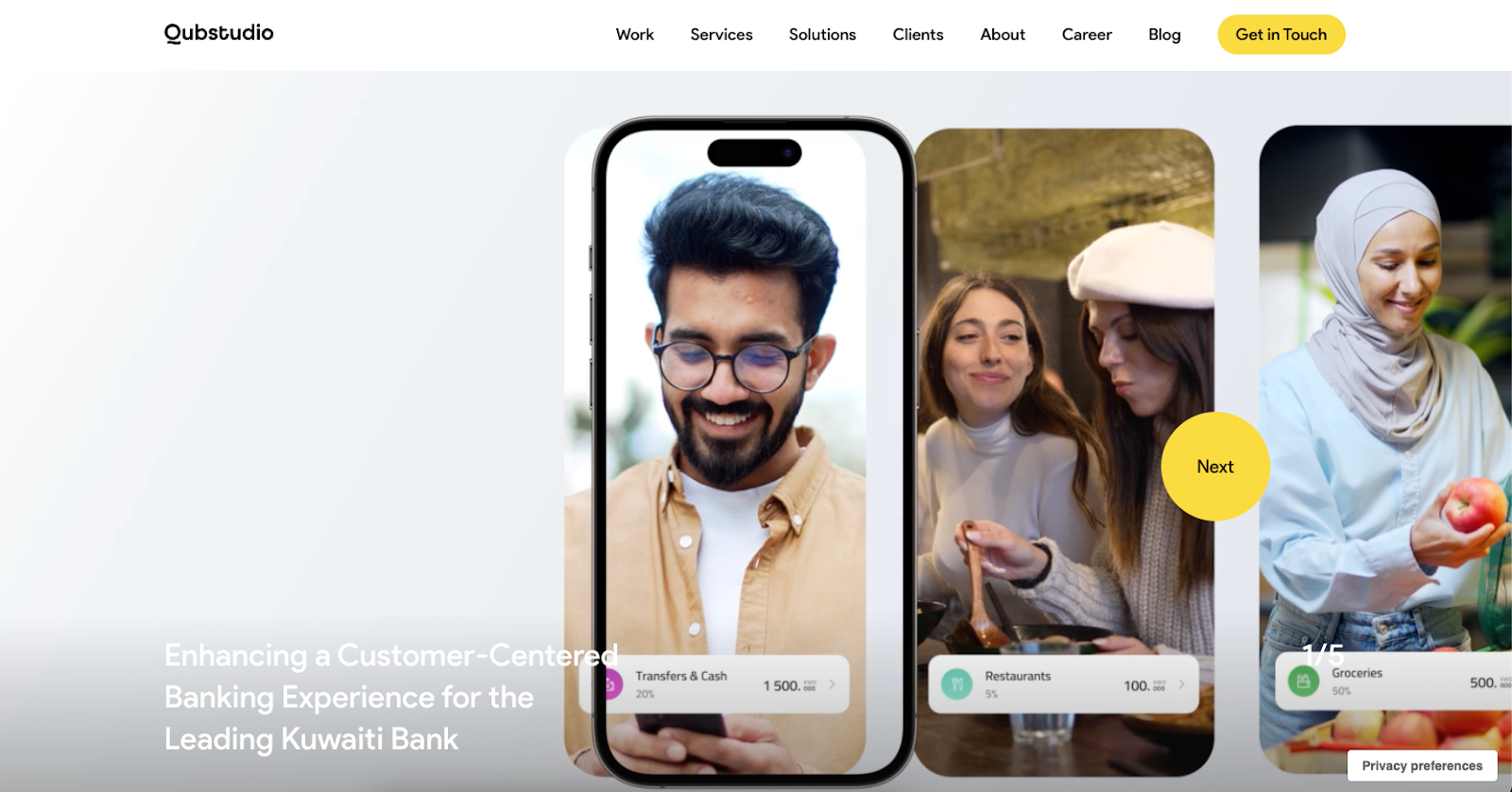
Qubstudio helps digital-first companies grow with design that’s grounded in both market insights and user research.
Their team of strategists, designers, and analysts collaborates to deliver products and brands that put users first. If you’re a tech-forward company who wants branding, research and design handled by the same agency, reach your full potential with Qubstudio.
6. Loop UX
A research company that goes wherever your users are
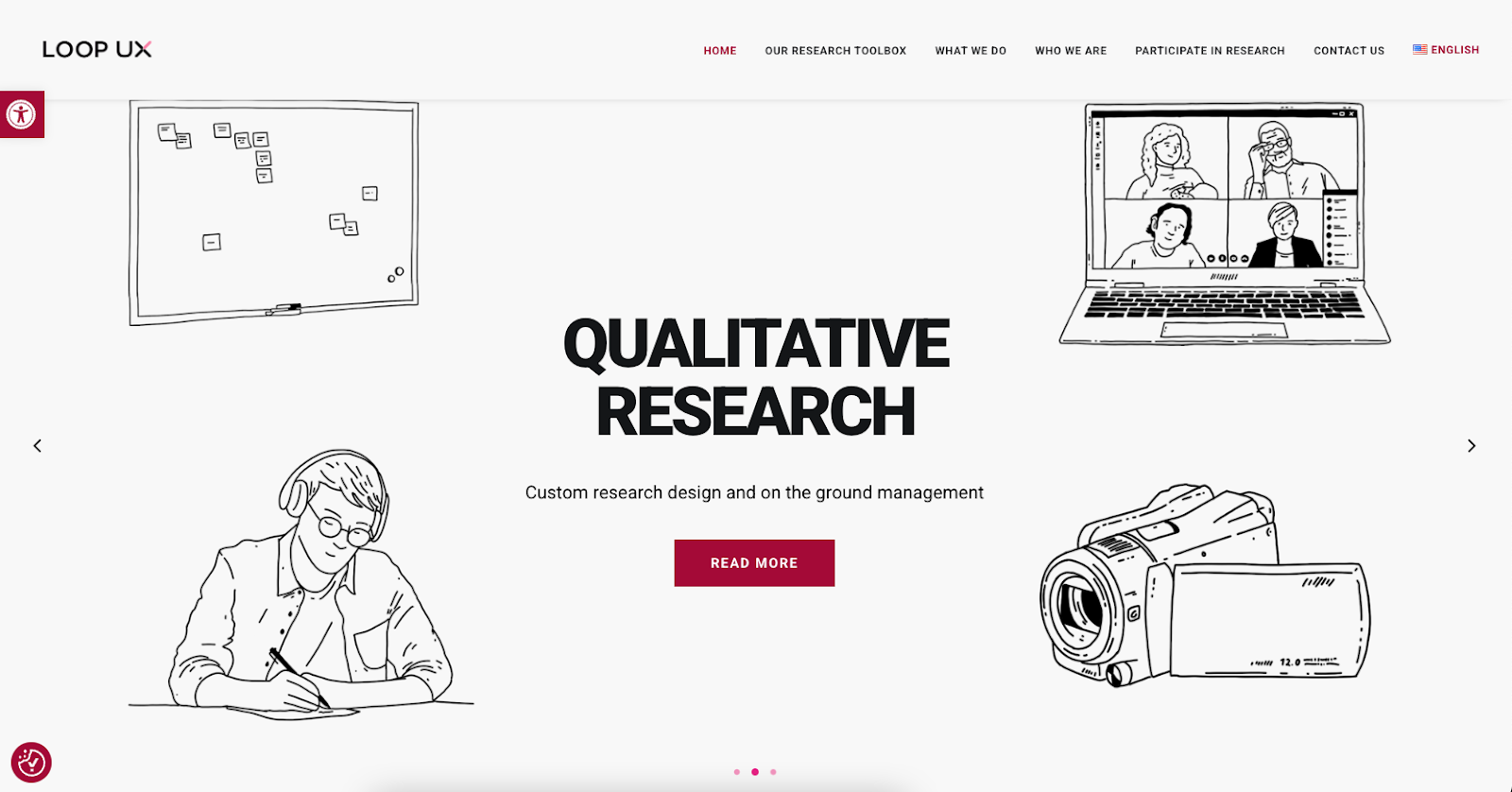
Loop UX is a global user research agency conducting studies in 47 countries across 6 continents. Their network of local researchers manage everything from research planning and respondent recruitment to video deliverables and simultaneous translation.
If your project is location-sensitive, Loop UX can provide actionable insights with cultural nuance.
7. UX Firm
Small, senior team
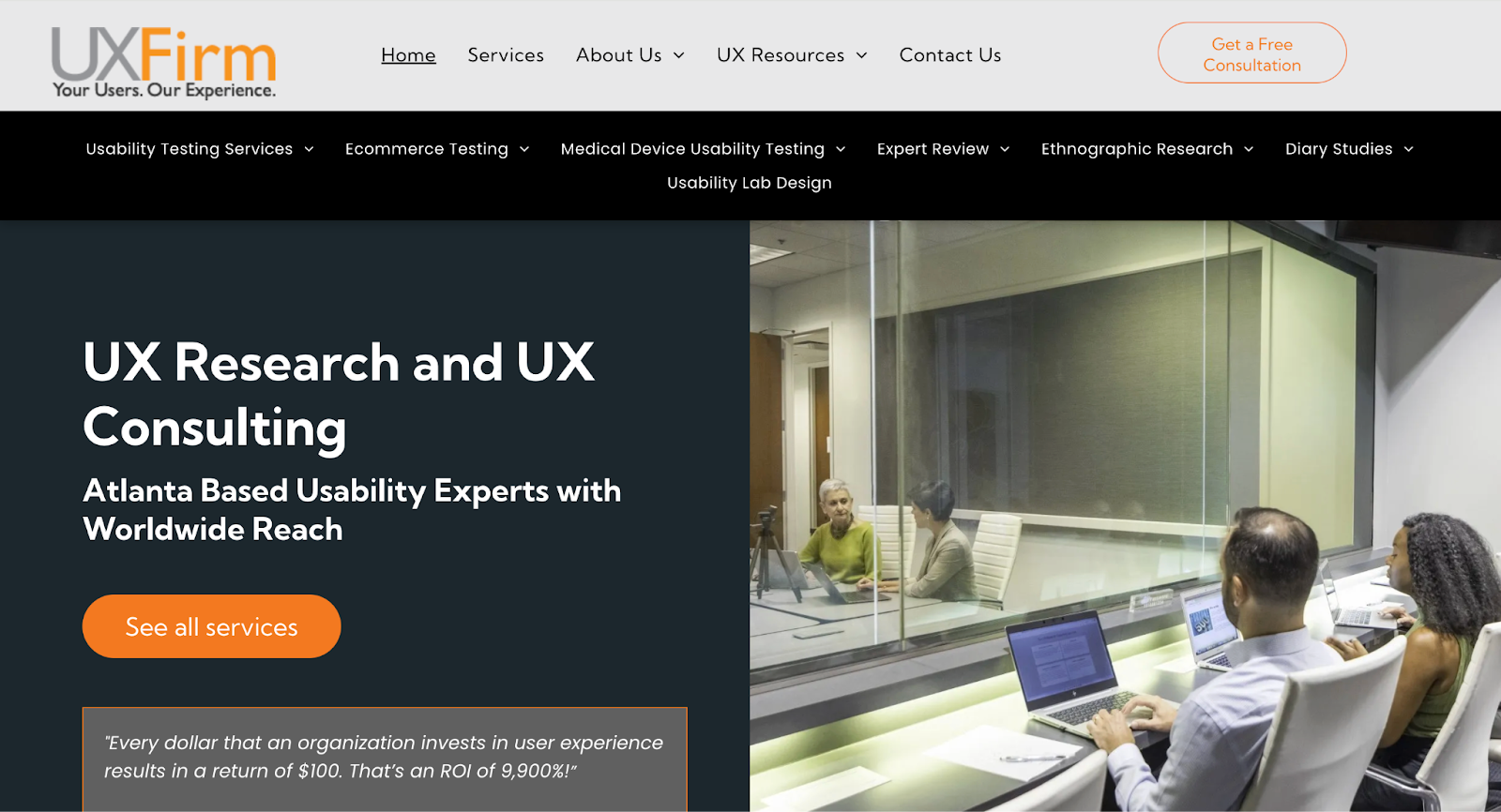
UX Firm is a boutique UX research agency that combines decades of experience with the agility of a small team to deliver top-tier UX research.
They offer end-to-end usability testing, human factors validation, and evidence-based recommendations for companies in software, medical devices, and ecommerce. Perfect for organizations seeking fast, high-quality insights without a large agency.
Top 7 UX research agency - Summary table
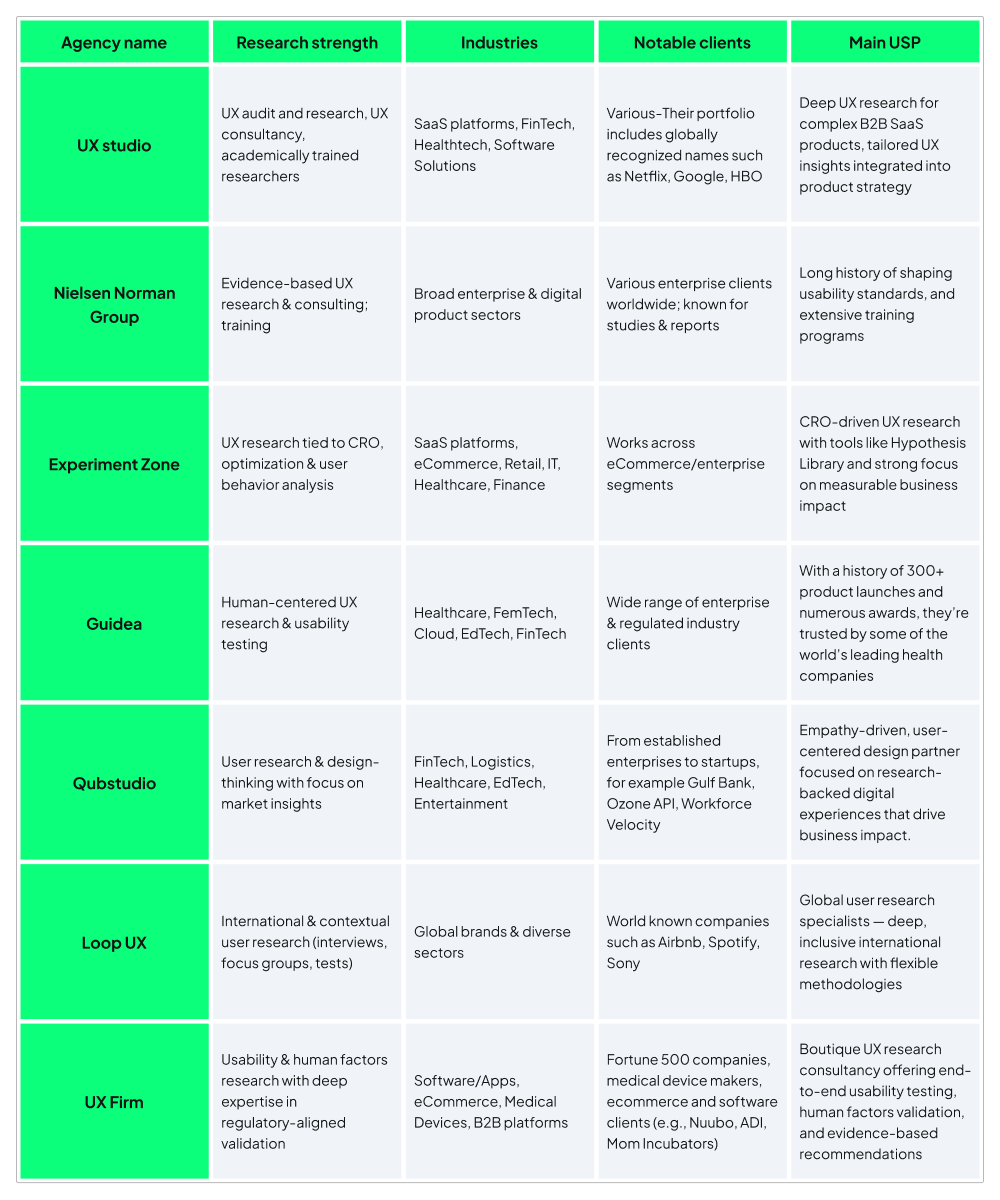
To give you a clear overview, we put together a summary table of the agencies mentioned above, highlighting their key research strengths, primary industries, notable clients, and main USPs.

When to hire a user experience research agency?
UX research is not just about conducting usability tests and user interviews. UX research is strategic. It’s a holistic approach with a toolbox of methodologies to choose from based on your goals and needs.
Below, we’ve listed some common situations when user experience research companies can support you.
1. You’re launching a new feature or product
Early user research lowers the risk of building features nobody needs and helps you avoid costly rework after launch. It lets you validate concepts before you invest time and budget into development — saving you from building features that end up unused or misunderstood.
User research also keeps your product focused. When you understand what people really want to achieve, it becomes easier to prioritize the right functionality and avoid adding extra features that only clutter the experience. Working with researchers allows you to stay aligned with real user needs from day one.
2. You’re redesigning existing UX / UI, but lack user feedback
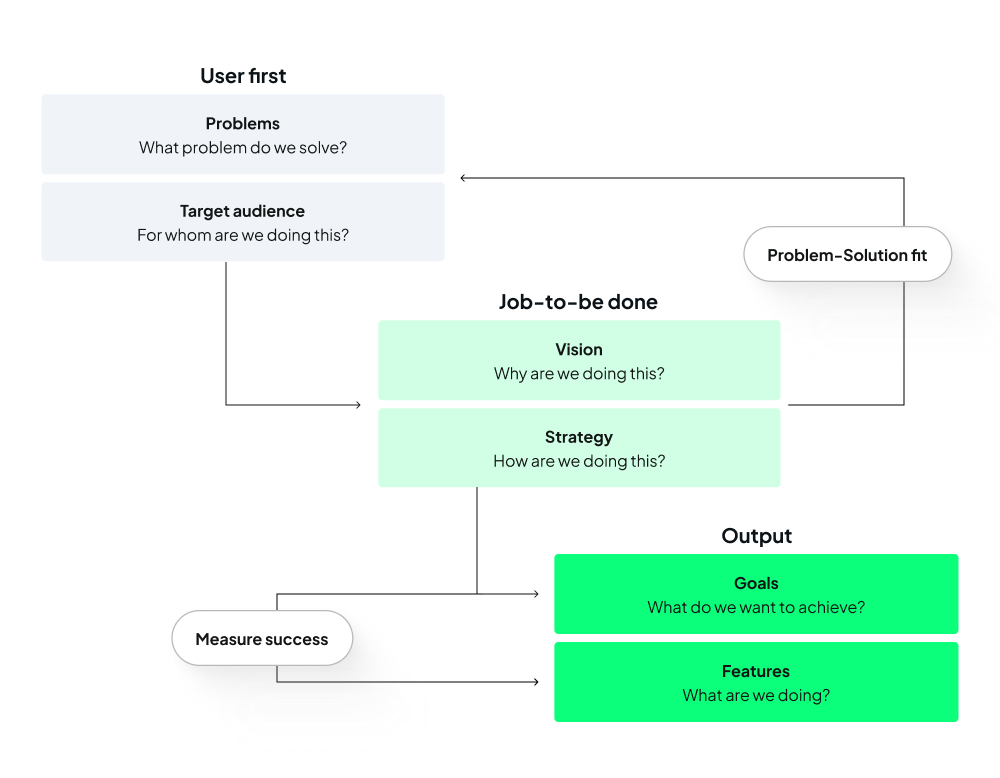
Before you pick new layouts, screens, or flows, you need a clear picture of who you’re designing for and what they truly need.
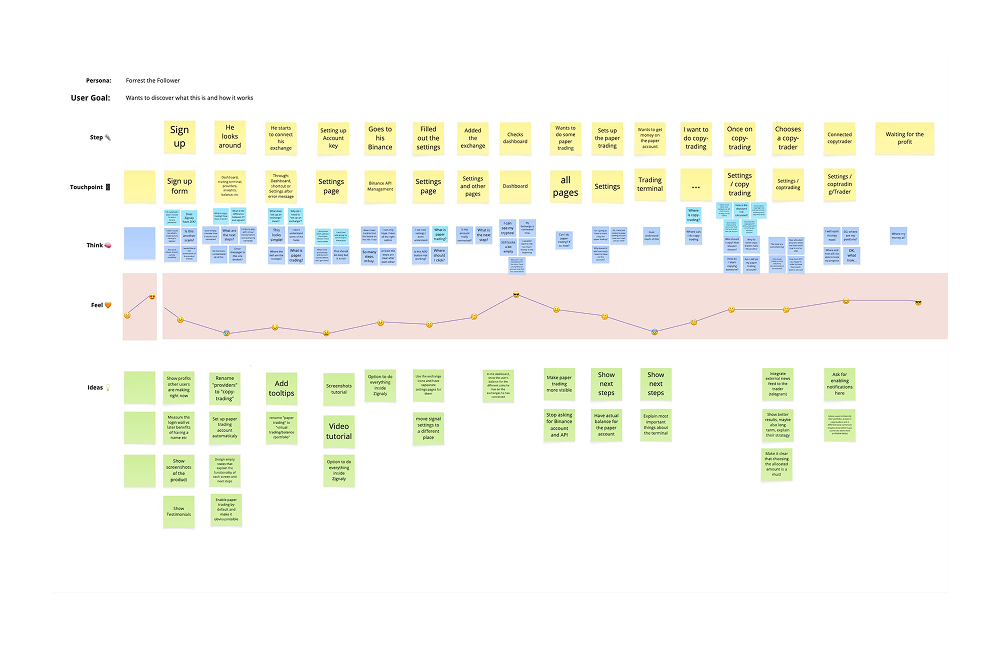
A user research company can help you turn assumptions, goals, and early guesses into real personas, clarified user journeys, and actionable insights to shape better interfaces.
Instead of designing based on internal opinions, you design based on evidence.
UX research helps you step closer to your users and understand their behavior. You’ll be able to build solutions that feel natural to them and they’ll enjoy using, not ones they have to fight their way through.
3. You experience a low conversion or a high churn rate
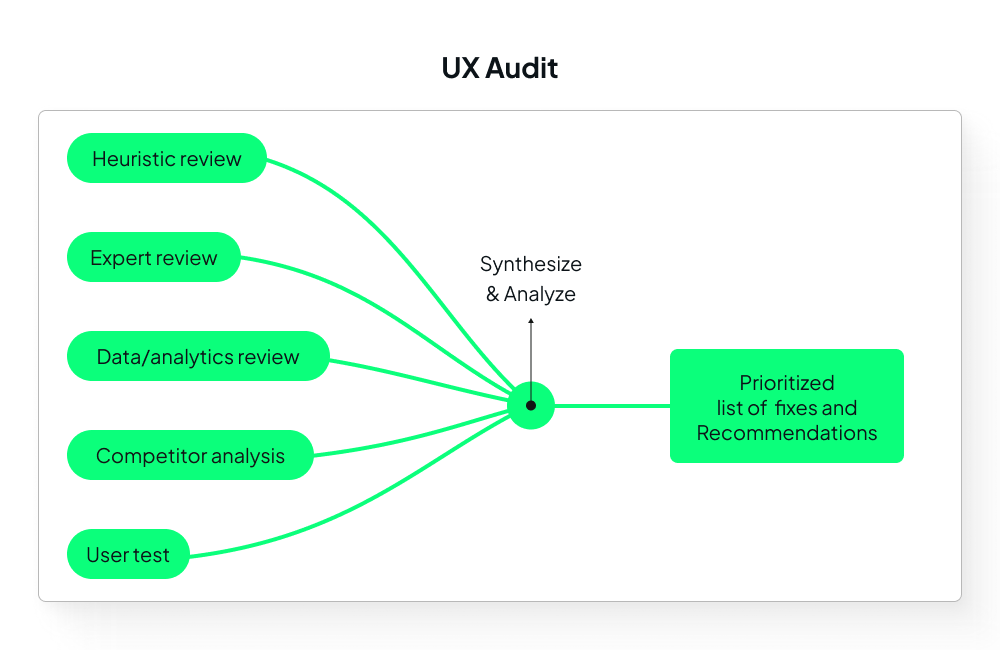
It’s not just about you understanding your users, your users also need to understand your product. That first impression, especially during onboarding, plays a huge role in whether people stick around or disappear.
User research helps you pinpoint where the confusion starts. Maybe people don’t really get what your product offers. Maybe your onboarding asks for too much too quickly.
When you simplify complex flows and make interactions intuitive, you reduce cognitive load and help users feel more confident using your product. That comfort will translate into higher retention, more signups, and repeated purchases.
4. Your product lacks cohesion
As products grow, it’s easy to slip into “feature-factory mode.” One team ships something new, another adds a workaround, and over time, you end up with disconnected parts stitched together like Frankenstein’s monster, rather than a coherent experience. The full user journey gets lost in the process.
UX research makes product design holistic again. If your product feels more like a maze than a smooth flow, it’s a sign to step back. Instead of layering on more fixes, research helps you reconnect the dots across the entire experience.
How to choose UXR consultants?
When selecting research consultants, you should consider the following factors.
Preparations and Project Plans
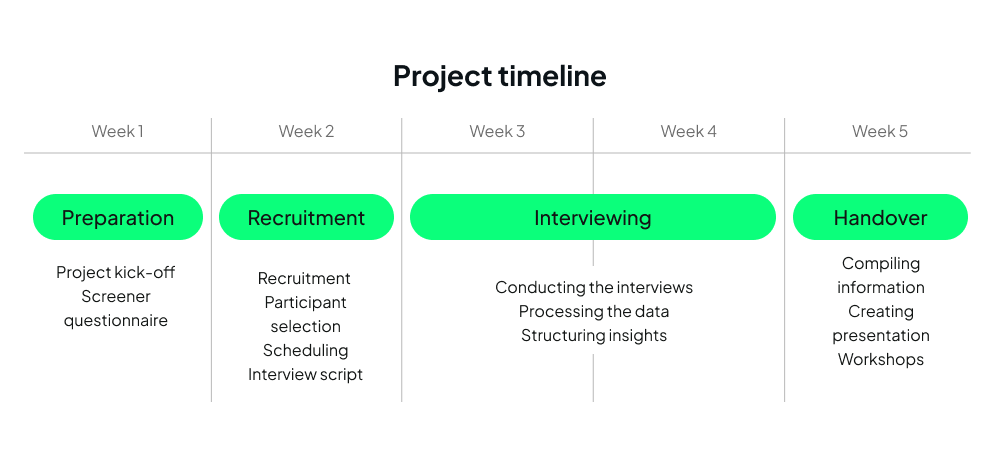
Define upfront what is essential versus negotiable for you, especially around participant criteria. Most agencies will talk with you first to discover your needs. Organized requirements make it easier for the user research agency to deliver what you expect.
When you reach out to us, our team will get back to you within 24 hours to discuss your needs. After that, you will receive our proposal with a tailored project plan, reviewed by our UX research consultants.
Timezone and working styles
Remote work is quite standard in UX research, so besides time zones, working style is a factor to consider. Ideally, the timezone difference shouldn’t be more than 6-8 hours. If you’re choosing an agency from another country, focus on whether their workflow and approach are a good match for your team and do not fixate solely on time-zone differences.
At UX studio, almost every project we do is carried out remotely. Our dedicated UX research consultants always make sure to understand your domain and way of working, so they can easily embed into your team and process.
Portfolio, references, testimonials
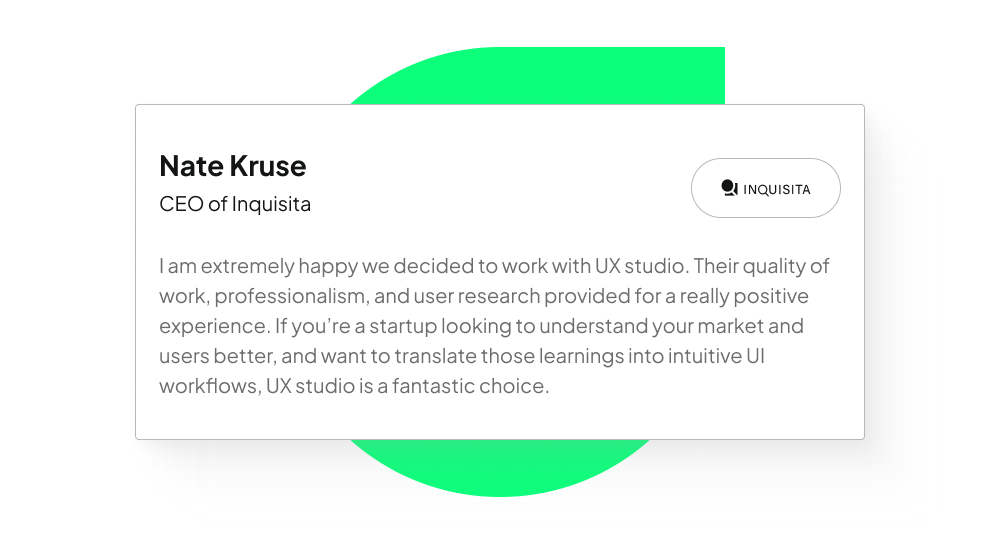
Checking out portfolios, references, customer testimonials, or previous work collections is excellent for evaluating UX design and research firms.
If you want to dig deeper, booking a consultation can help you understand the approach and capabilities in more detail.
Cost and value
Budgeting for UX services (or any solutions you are investing in) is crucial for every business. Agencies usually work with fixed daily rates for which they give you full-time experts, focusing on one project at a time.
Keep in mind that value isn’t just about cost: it’s about getting the right insights efficiently and effectively, so when you evaluate proposals, consider:
- Whether the proposed methods fit your needs
- Depth of understanding and experience of the team
- Flexibility in approach
- The exact deliverables you will receive
- Project timeline and milestones
Provided deliverables
Deliverables can differ from agency to agency, so make sure to align on what to expect before the project kicks off. While the format might vary, most UX research projects include some combination of:
- Research plan – outlining objectives, methods, and timelines
- Recruitment criteria – who will participate and why
- Session materials – scripts, prototypes to lead the session
- Raw data or session recordings – if agreed in advance
- Full research reports – all findings collected and analyzed
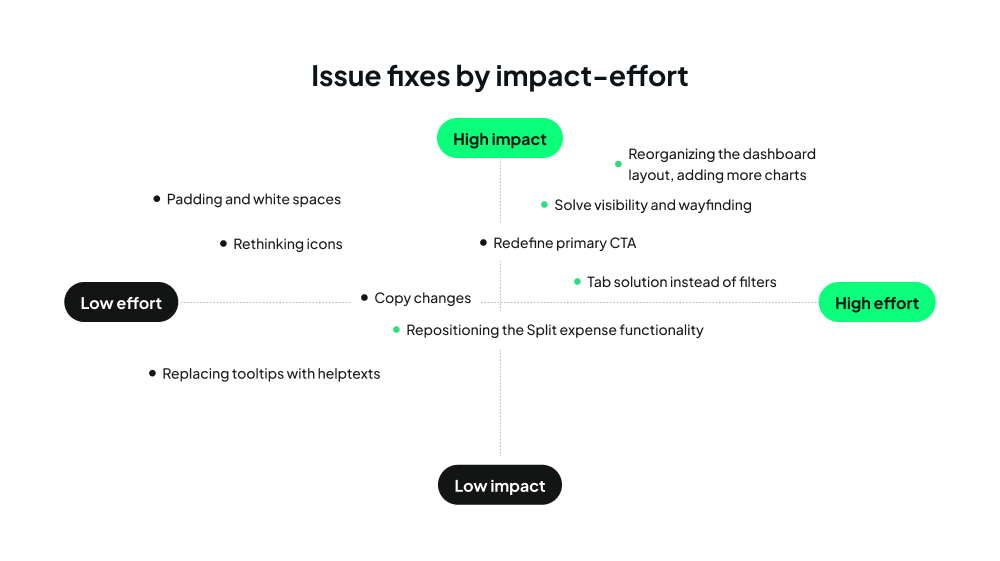
- Prioritization frameworks – tools like UX scorecards or impact-effort maps
- Recommendations and next steps – actionable guidance based on insights
- Workshops or stakeholder readouts – to present findings in a digestible format
The most important thing is to align on the final deliverables at the beginning of the project to make sure you’ll receive the desired result.
Common mistakes companies make when working with UX research agencies
Even with the right agency, projects can go off track if expectations aren’t clearly aligned from the start. Here are some pitfalls we see most often, and how to avoid them:
1. Expecting design from a research-only project
Research and design are closely connected, but they aren’t the same thing. If you need both, make sure it’s included in your inquiry.
2. Underestimating participant recruitment time
Finding the right users, especially in niche or B2B markets, takes longer than most expect. When you are reaching out to UX research consultants, make sure that the research isn’t rushed.
3. Skipping essential context about your business
UX research agencies don’t need to know your industry as well as you do, but they do need a strong understanding. The more context you share early on, the more actionable the insights will be.
4. Lacking clarity on goals and success metrics
If project goals shift during the collaboration or if feedback from stakeholders clash, research can become confusing and ineffective. Aligning expectations upfront saves time and effort for both sides.
5. Treating the relationship as transactional instead of collaborative
The best research comes from a true partnership. Agencies deliver their strongest work when the client stays engaged, providing feedback, receptive to guidance, and collaborating throughout the process.
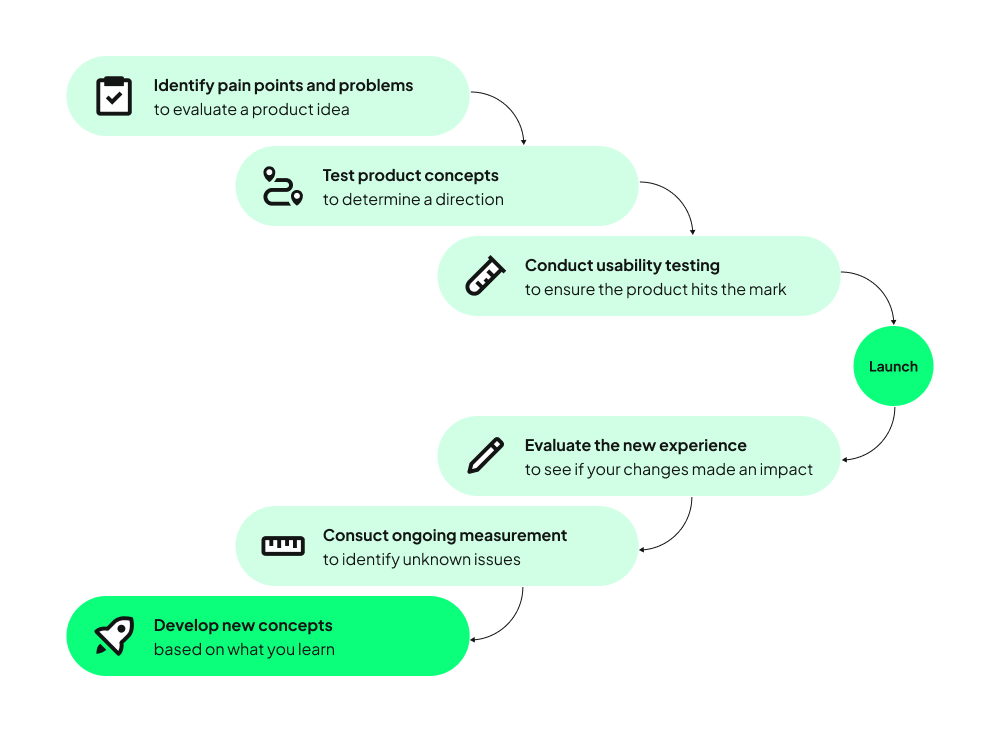
The key takeaway: effective UX research is a shared effort. Strong collaboration leads to insights that truly drive better user experiences.
Research methods agencies use
When you work with a UX research agency, one of the things you’ll notice is the range of research methods they use. Each method has its purpose, and the right approach depends on your goals, your product’s maturity, and the kind of insights you need.
The method toolkit may seem a bit overwhelming, and of course, you don’t have to choose the right ones for yourself.
Still, to help you make sense of this landscape, we can organize them on a scale of Attitudinal to Behavioral, and Qualitative to Quantitative.
Behavioral methods help you understand what people do. They capture real actions, interactions, and often reveal patterns users don’t think to mention.
Attitudinal methods focus on what people say. They uncover perceptions, motivations, expectations, and the thinking process behind their choices.
Both perspectives are essential. Behavior shows how people use a product in practice, while attitudes help explain the “why” behind those decisions. Together, they give you a well-rounded picture of the user experience.
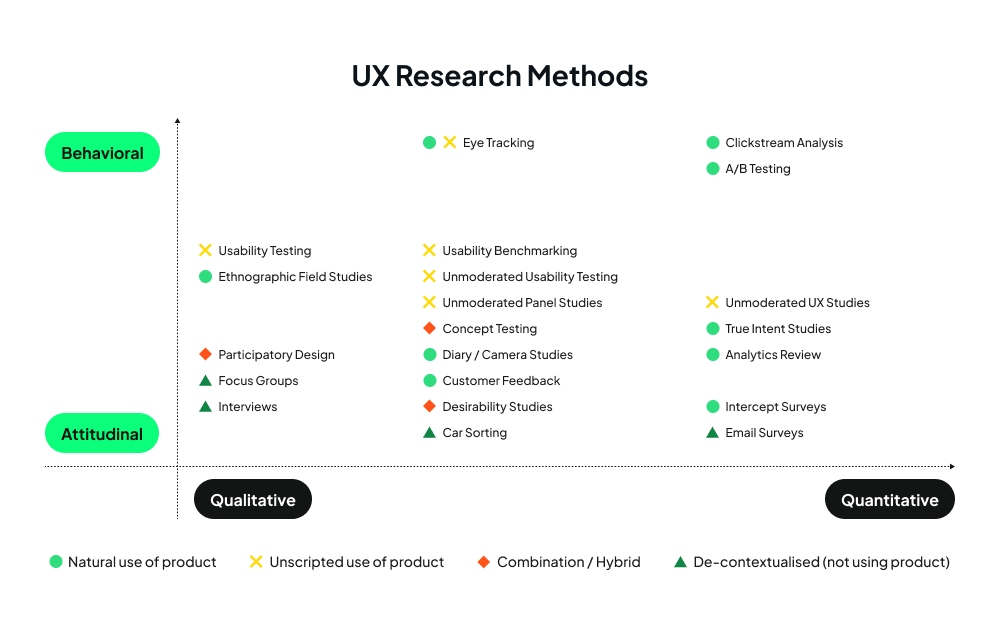
Here are a few examples of pain points and possible methods to address them:
If you have a new idea in mind, concept testing can help you understand whether it resonates with users before investing further. Pairing it with interviews gives you deeper insight into expectations, motivations, and where the concept may need refinement.
If you want to improve your product’s usability, moderated usability tests reveal how people interact with key flows and where they get stuck. Combining this with analytics provides the bigger-picture context: how often issues occur, who they affect, and which parts of the product need the most attention.
When your goal is optimization, A/B testing lets you compare variations and understand which one performs better in the real world, while clickstream analysis shows how users navigate and engage across the product.
To uncover the unmet needs of your users, field studies allow you to observe users in their natural environment and understand the context behind their behaviors. Diary studies complement this by capturing how people use a product over time.
When timelines are tight, unmoderated tests help you gather feedback quickly and efficiently. Surveys add a layer of quantitative input to validate patterns at a larger scale to keep up with your deadline.
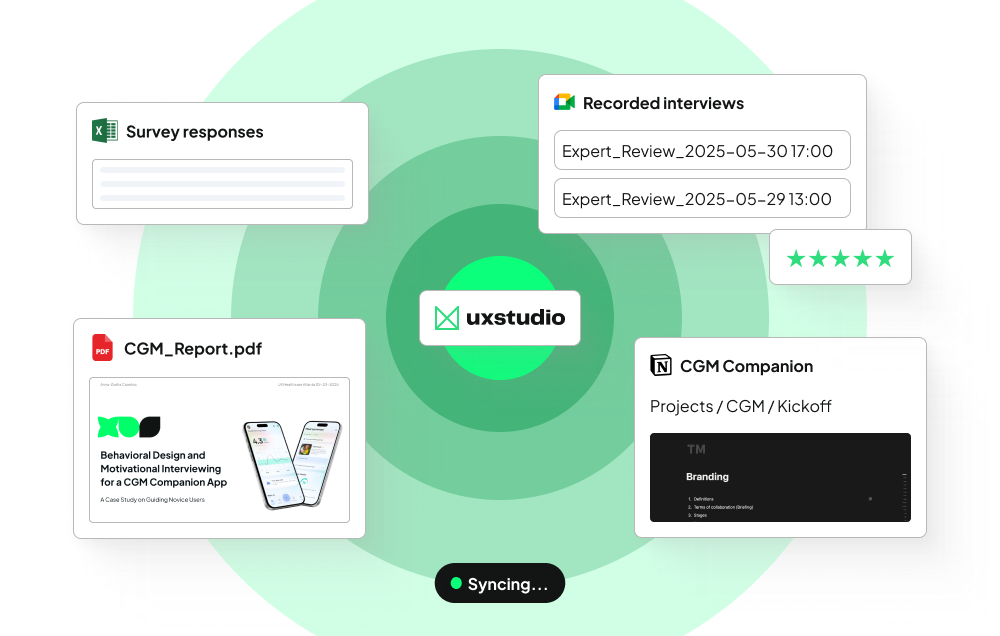
Red flags and green flags when choosing a UX agency
With many UX research firms on the market, it can be difficult to choose the right partner for your needs. Here are some easy-to-spot signs you should consider.
Green flags
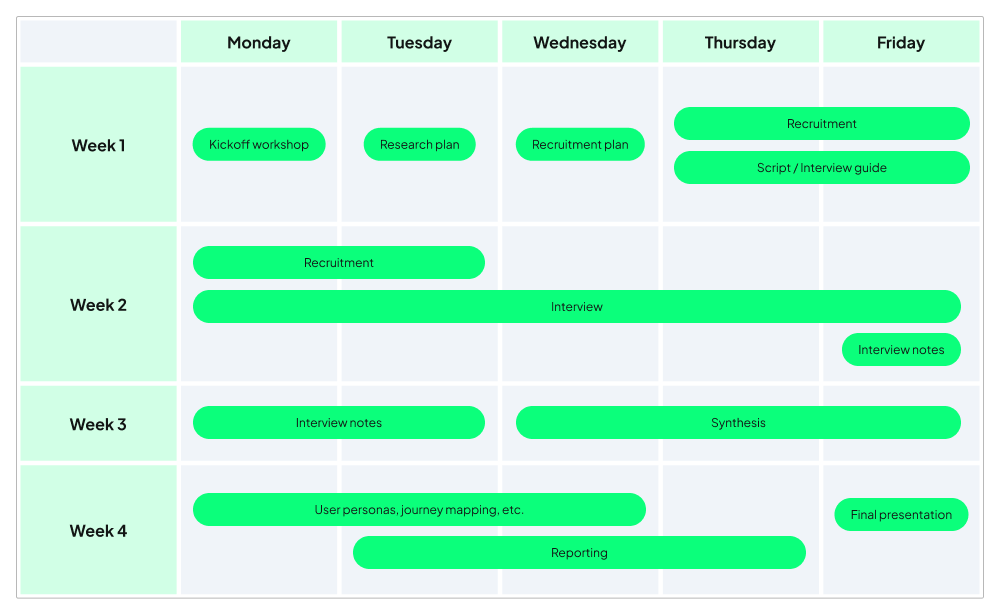
- They propose a clear research plan. Good agencies never jump straight into testing, there is always a discovery or preparation to start with.
- Methods are explained and tailored to your goals. There’s no one-size-fits-all approach. It’s great if they have a wide range of methods to offer.
- Senior researchers are involved. Even if juniors run sessions, experienced oversight can make a difference.
- Transparent deliverables and timelines. You should always know where the process is and when to expect updates.
- Thoughtful participant recruitment. They help refine criteria and create screeners to guide the recruitment process.
Red flags
- Vague scopes or empty promises. If they can’t clearly define outputs, proceed with caution.
- No synthesis or unclear insights. Research without synthesis is just raw data.
- Little interest in your domain or context. Good UX research consultants dive deep into your domain to propose the most suitable methods.
- Rushing into testing. This often produces irrelevant or misleading findings. Understanding the domain, the targeted user group, and the business goals is a must.
- Relying heavily on tools or templates. The human element makes UX research holistic; following a template blindly can disrupt the purpose.
Searching for a trustworthy UX research agency?
At UX studio, we go beyond basic usability testing and interviews with deep analysis, data synthesis, and strategic insights.
If you feel that your product is underperforming or you want to introduce new features with a data-driven approach, start your journey and reach out to us.